


Pasteles en hoja are a beloved Dominican dish made with a flavorful mixture of green plantains, root vegetables, and squash, filled with seasoned meat, wrapped in plantain leaves, and boiled until tender. They’re especially popular during Christmas, when they become an essential part of many Dominican holiday celebrations.
In the Dominican Republic, preparing pasteles en hoja is often a family affair. From grating the plantains and yautía to preparing the filling and wrapping each pastel, it’s a tradition that brings people together in the kitchen. And there’s something special about unwrapping a warm pastel and enjoying that first bite of perfectly seasoned masa and savory meat.
My Dominican pasteles en hoja recipe combines green plantains, yautía, and auyama to create a soft, flavorful masa filled with beef picadillo or pork picadillo. Each pastel is wrapped in plantain leaves and parchment paper, then boiled until cooked through.
Serve them alongside Dominican pernil, moro de guandules con coco, and ensalada rusa for a traditional Nochebuena dinner. They’re also wonderful on their own with a little mayo-ketchup sauce or your favorite hot sauce.

What Are Pasteles En Hoja?
Pasteles en hoja are a traditional Dominican dish made with a seasoned masa of green plantains, root vegetables, and squash, filled with savory meat and wrapped in plantain leaves before being boiled.
Unlike tamales made with corn masa, Dominican pasteles en hoja typically use green plantains and starchy root vegetables such as yautía. Auyama (squash) adds color, flavor, and a soft texture to the masa.
The filling can vary, but popular options include seasoned ground beef, pork, or chicken. In this recipe, I use beef picadillo or pork picadillo, both of which complement the plantain masa beautifully.
Pasteles en hoja are especially popular during Christmas and other family celebrations in the Dominican Republic. They’re often prepared in batches, making them convenient to share with family or freeze for later.

How to Make Pasteles en Hoja
Step 1: Prepare the Achiote Oil
In a small saucepan over low heat, warm the vegetable oil with the annatto (achiote) seeds for 3–4 minutes, until the oil turns a deep orange color.
Remove from the heat and let it cool. You can strain out the seeds if you prefer a smooth oil. Set aside for preparing the masa and assembling the pasteles.
Step 2: Prepare the Masa
Peel the green plantains, yautía, and auyama. Using the fine side of a grater or a food processor with a fine grating disk, grate everything into a large bowl until you have a moist, well-combined mixture.
Add the adobo seasoning, sofrito, and 2 tablespoons of the prepared achiote oil. Mix until the masa is evenly seasoned and has a uniform color.

Step 3: Prepare the Wrappers
Cut the parchment paper into 10 × 10-inch squares and the plantain leaves into approximately 6 × 6-inch squares.
Place a square of plantain leaf on top of each piece of parchment paper. Brush or spoon about 1 teaspoon of achiote oil onto the center of each leaf to help prevent sticking.
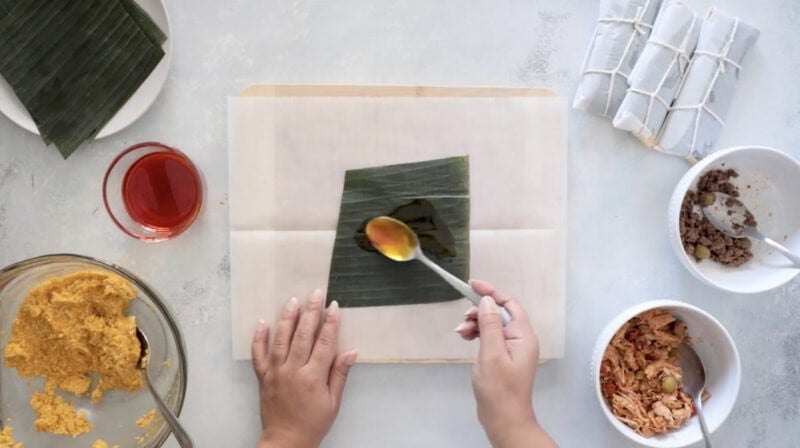
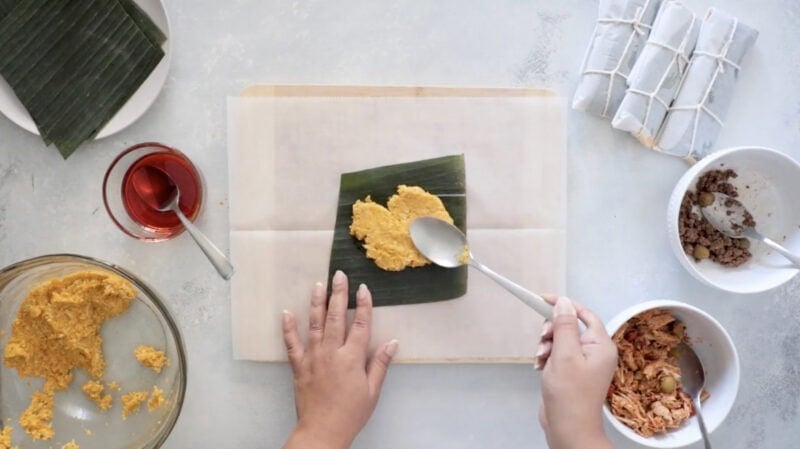
Step 4: Assemble the Pasteles
Spoon approximately 3 tablespoons of masa onto the center of each prepared plantain leaf and gently spread it into an oval, leaving a clean border around the edges.
Add about 2 tablespoons of beef picadillo and pork picadillo, or shredded chicken filling, to the center of the masa.

Fold the bottom edge of the parchment paper up and over the filling, then roll tightly to form a compact bundle. Fold in the sides to seal the ends and secure with kitchen twine.
Repeat with the remaining masa and filling.
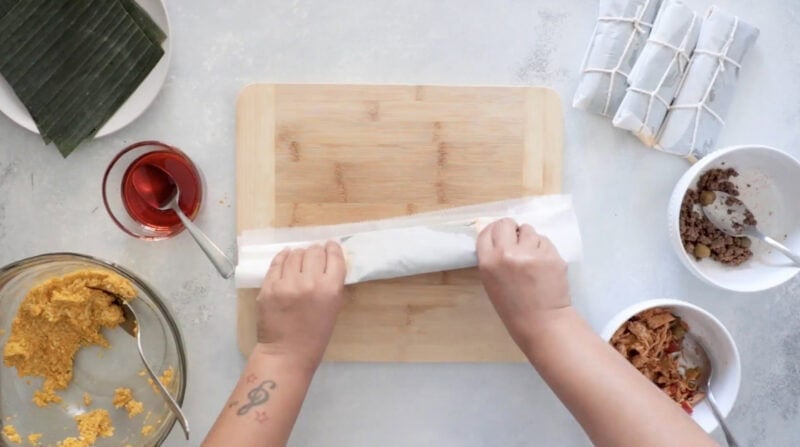
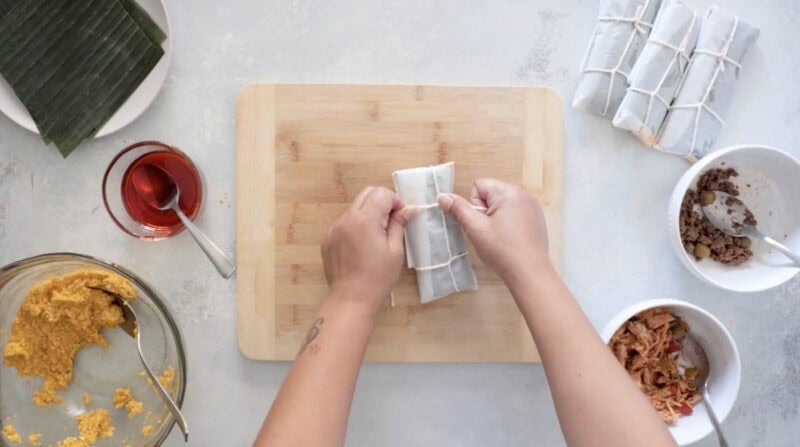
Step 5: Boil the Pasteles
Bring a large pot of salted water to a steady boil. Carefully add the wrapped pasteles and cook for 30–45 minutes, or until the masa is set and the pasteles feel firm.
If cooking the pasteles directly from frozen, allow approximately 1 hour.
Step 6: Drain and Serve
Using tongs, carefully remove the pasteles from the water and allow them to drain.
Remove the kitchen twine and unwrap each pastel carefully, as the contents will be hot. Serve warm with your favorite sauce or traditional Dominican side dishes.
What to Serve With Pasteles en Hoja
Pasteles en hoja are delicious on their own, but they’re also a wonderful addition to a traditional Dominican holiday meal. Here are some of my favorite ways to serve them:
- For a traditional Nochebuena dinner: Serve pasteles en hoja alongside Dominican pernil, moro de guandules con coco, and ensalada rusa. Add a glass of creamy coquito to complete your holiday menu. For more ideas, explore my collection of Dominican holiday recipes.
- With your favorite sauce: Some people enjoy their pasteles with ketchup, while others prefer mayo-ketchup sauce or a little hot sauce. Serve the sauces on the side so everyone can choose their favorite.
- As part of a holiday spread: Pasteles en hoja are perfect for serving alongside other Dominican dishes at family gatherings. Prepare a batch with beef picadillo and another with pork picadillo or shredded chicken filling to give everyone a choice.

How to Store, Freeze, and Reheat Pasteles en Hoja
One of the best things about pasteles en hoja is that you can prepare them ahead of time and freeze them until you’re ready to serve. This makes them especially convenient when planning a Dominican holiday meal.
- Refrigerate: Store cooked pasteles, still wrapped, in an airtight container in the refrigerator for up to 3 days. Allow them to cool slightly before refrigerating, and place them in the refrigerator within 2 hours of cooking.
- Freeze: Arrange assembled, uncooked pasteles in a single layer on a baking sheet and freeze until firm. Transfer them to freezer-safe bags or airtight containers and freeze for up to 4 weeks for the best texture and flavor. You can also freeze cooked pasteles after cooling them.
- Reheat refrigerated pasteles: Place cooked pasteles, still wrapped, in gently boiling water for approximately 10–12 minutes, or until heated through. You can also reheat them in a steamer basket.
- Cook from frozen: Place frozen, uncooked pasteles directly into boiling water and cook for approximately 1 hour, or until the masa is fully cooked and firm.
- Reheat cooked pasteles from frozen: Place the wrapped pasteles in gently boiling water for approximately 20–25 minutes, or until heated through.
Tip: Label your frozen pasteles with the date and filling type, especially if you’re making different batches with beef, pork, or chicken.

Tips for Making the Best Pasteles en Hoja
- Use green plantains. Choose firm, green plantains rather than ripe ones. Green plantains provide the starchy texture needed for the masa. If you’re unfamiliar with preparing them, check out my guide on how to peel plantains.
- Grate the vegetables finely. Use the fine side of a grater or a food processor with a fine grating disk. This helps create a smoother, more cohesive masa that’s easier to spread and wrap.
- Keep the masa covered. While assembling the pasteles, cover the remaining masa to prevent it from drying out.
- Don’t overfill the pasteles. Leave a clean border around the masa and filling so you can fold the wrappers securely without everything spilling out.
- Use achiote oil for color and flavor. The annatto-infused oil gives the masa its beautiful orange color and adds flavor. Lightly oiling the plantain leaves also helps prevent sticking.
- Wrap and tie securely. Fold the parchment paper snugly around each pastel and secure it with kitchen twine to help keep everything together during cooking.
- Prepare them ahead of time. Assemble the pasteles and freeze them for up to 4 weeks. You can cook them directly from frozen, making holiday meal preparation much easier.


Pasteles en Hoja (Dominican Pasteles)
Author:Equipment
- 1 Saucepan
Ingredients
- 1/3 cup vegetable oil
- 1 tablespoon annatto achiote seeds
- 2 large green plantains peeled and cut in half
- 1 pound white yautía peeled
- 1 pound auyama kabocha squash, peeled and halved
- 1 teaspoon adobo seasoning
- 2 tablespoons sofrito cilantro, garlic, onion, cubanelle peppers
- Plantain leaves sold frozen
- Parchment paper
- Kitchen twine cooking string
- 3 cups cooked beef picadillo or pork picadillo for the filling
Instructions
- Prepare the achiote oil: In a small saucepan over low heat, warm the vegetable oil with the annatto (achiote) seeds for 3–4 minutes, until the oil turns deep orange. Remove from the heat and let cool. Strain out the seeds if desired.
- Prepare the masa: Finely grate the green plantains, yautía, and auyama into a large bowl. Add the adobo seasoning, sofrito, and 2 tablespoons of the prepared achiote oil. Mix until evenly colored and well combined.
- Prepare the wrappers: Cut the parchment paper into 10 × 10-inch squares and the plantain leaves into approximately 6 × 6-inch squares. Place a plantain leaf square on each piece of parchment paper and brush about 1 teaspoon of achiote oil onto the center of the leaf.
- Assemble the pasteles: Add approximately 3 tablespoons of masa to the center of each plantain leaf, spreading it into an oval and leaving a clean border. Top with about 2 tablespoons of beef picadillo, pork picadillo, or shredded chicken filling. Fold the parchment paper up and over the filling, roll tightly, fold in the sides to seal, and secure with kitchen twine. Repeat with the remaining ingredients.
- Boil the pasteles: Bring a large pot of salted water to a steady boil. Add the wrapped pasteles and cook for 30–45 minutes, or until the masa is set and the pasteles feel firm. If cooking from frozen, allow approximately 1 hour.
- Serve: Carefully remove the pasteles from the water using tongs and let them drain. Remove the twine, unwrap carefully, and serve warm with ketchup, mayo-ketchup sauce, or your favorite hot sauce.
Video
Notes
- Keep the masa covered while assembling the pasteles to prevent it from drying out.
- Avoid overfilling and leave a clean border around the masa to make wrapping easier.
- Wrap and tie the pasteles securely to help them hold their shape during cooking.
- Assemble and freeze uncooked pasteles for up to 4 weeks. Cook directly from frozen for approximately 1 hour.
Nutrition
The nutritional information of this recipe and all recipes on mydominicankitchen.com is only an estimate. The accuracy of any recipe on this site is not guaranteed.




 Follow Me on Facebook
 Follow Me on Instagram
Thao says
Can the pasteles be frozen AFTER they’ve been cooked?
My Dominican Kitchen says
Yes, you can freeze the pasteles after they’ve been cooked. Just let them cool completely, then wrap them well and store them in an airtight container or freezer bag.
When you’re ready to enjoy them, you can reheat them by steaming or boiling until heated through. They come out just as delicious.