






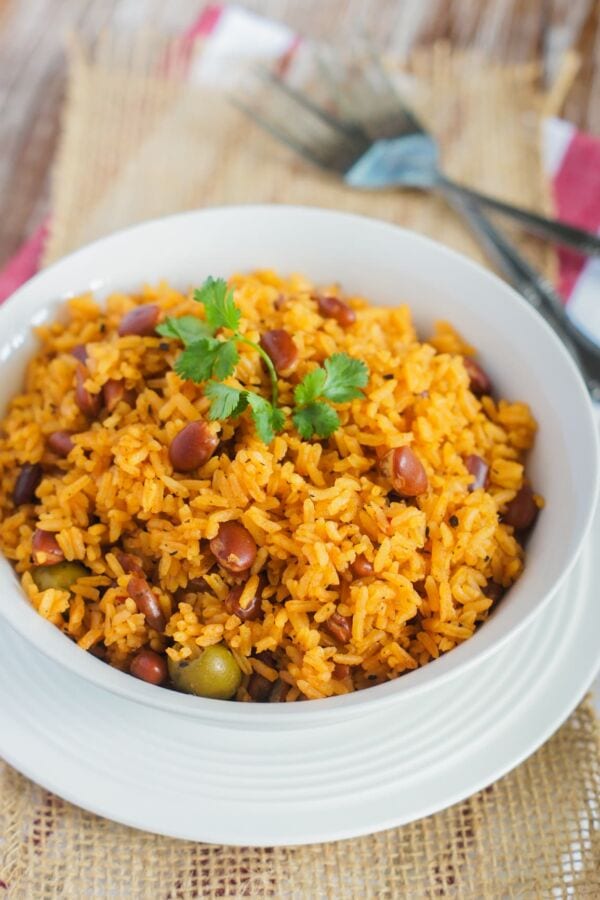

Moro de habichuelas rojas is one of those pots that just makes the whole house smell like home. It’s rice and red beans cooked together in a single caldero with sofrito, sazón, and just enough seasoning to make every grain taste like something. No separate pot of beans. No extra steps. Just one pot, done in under an hour, and good enough to carry the whole meal.
In the Dominican Republic, this dish shows up all the time alongside a main plate. It’s not la bandera (that’s Arroz Blanco with Habichuelas Guisadas and stewed meat on the side), but moro holds its own as an everyday staple that’s just as satisfying. Rich, hearty, and deeply flavorful, it pairs beautifully with almost anything on the table.
At home, we’d usually serve it with Pollo Guisado (Dominican Stewed Chicken) or Rabo Encendido (Spicy Dominican Oxtail Stew), a simple salad on the side, and some Maduros for that sweet contrast. Cocina criolla at its most comforting.
Step-by-Step Instructions
Start by heating the oil in a large caldero or heavy-bottomed pot over medium heat. Add the onion, bell pepper, and garlic and cook for about 2 minutes, stirring occasionally, until everything softens and starts to smell good.
Add the cilantro, tomato sauce, bouillon cubes, sazón, oregano, adobo, and black pepper. Stir everything together and let it cook for about a minute until the seasonings bloom and the mixture turns fragrant and glossy.
Pour in the red beans with all their liquid, then add the water. Stir well and bring it all to a boil over medium-high heat.
Add the rinsed rice and stir to distribute evenly. Cook uncovered over medium heat, stirring occasionally, until most of the liquid has been absorbed and the surface of the rice looks dry, about 10 minutes. Give it a stir every couple of minutes during this stage so the rice cooks evenly and doesn’t stick to the bottom of the pot.
Reduce the heat to low, cover the pot, and let it steam undisturbed for 25 minutes. Then uncover, gently fluff the rice from the edges toward the center, and cover again for 5 more minutes. Serve warm.
Bonus: if you’re feeling patient and want a little extra something, let it sit on low a touch longer and you might get a natural concón at the bottom of the pot. That crispy rice layer is never a bad thing.
Serving Suggestions
Moro de habichuelas rojas is a natural side dish, but it holds its own next to some really good mains. Here are a few pairings that just make sense:
- Pollo Guisado (Dominican Stewed Chicken) is the classic choice. That saucy, slow-cooked chicken is made for soaking into every grain.
- Rabo Encendido (Spicy Dominican Oxtail Stew) is rich and fall-off-the-bone tender. Its bold sauce pairs perfectly with the hearty moro.
- Bistec Encebollado (Dominican Steak and Onions) gives you that savory, saucy contrast that’s simple but never boring.
- Chuletas Fritas (Dominican Fried Pork Chops) bring a crispy, satisfying element to the plate.
- For balance, add a light Ensalada Verde (Dominican Green Salad) or a creamy Ensalada de Aguacate (Dominican Avocado Salad).
- And of course, a side of Maduros (Fried Sweet Plantains) for that sweet, caramelized contrast, or Tostones (Fried Green Plantains) if you want something crispy and salty.
Storage Tips
Store leftover moro in an airtight container in the refrigerator for up to 4 days. To reheat, add a tablespoon or two of water, cover, and warm over low heat on the stovetop or in the microwave. The little bit of water helps bring the rice back to life without drying it out.
This dish also freezes well. Let it cool completely, portion it into freezer-safe containers, and freeze for up to 2 months. Thaw overnight in the refrigerator before reheating.
Recipe Tips
- No extra salt needed. The bouillon cubes and adobo season the whole pot, so resist the urge to add more until you’ve tasted it at the end.
- Rinse your rice before cooking. It removes excess starch and helps the moro cook up with separate, fluffy grains instead of a sticky texture.
- Use a caldero if you have one. The heavy bottom distributes heat evenly, which means better rice and the best chance at that crispy concón at the bottom.
- Want to make it vegan? Simply swap the chicken bouillon for vegetable bouillon. Everything else stays the same and the flavor holds up beautifully.
- Brown rice works but needs more water and a longer cook time. Stick to long-grain white rice for the best result with these exact measurements.


Moro de Habichuelas Rojas (Dominican Rice and Beans)
Author:Equipment
Ingredients
- 3 tablespoons vegetable oil (45 ml)
- 1 small red onion, finely diced (about ¾ cup / 100 g)
- ½ medium bell pepper, green or red, finely diced (about ½ cup / 75 g)
- 2 garlic cloves, minced
- 1 tablespoon fresh cilantro, chopped (1 g)
- 2 tablespoons tomato sauce (30 ml)
- 2 chicken bouillon cubes (about 10 g total)
- 1 teaspoon sazón with achiote (2 g)
- 1 teaspoon dried oregano (1 g)
- ½ teaspoon adobo seasoning (1.5 g)
- ½ teaspoon ground black pepper (1 g)
- 1 can (15 oz / 425 g) red kidney beans, undrained
- 3 cups water (720 ml)
- 3 cups long-grain white rice, rinsed and drained (585 g)
Instructions
- Heat the oil in a large caldero or heavy-bottomed pot over medium heat. Add the onion, bell pepper, and garlic. Cook, stirring occasionally, for about 2 minutes until softened.
- Add the cilantro, tomato sauce, bouillon cubes, sazón, oregano, adobo, and black pepper. Stir to combine and cook for 1 minute until fragrant.
- Pour in the beans with their liquid and the water. Stir well and bring to a boil over medium-high heat.
- Add the rice and stir to distribute evenly. Cook uncovered over medium heat, stirring occasionally, until most of the liquid has been absorbed and the surface of the rice looks dry, about 10 minutes.
- Reduce the heat to low, cover the pot, and cook undisturbed for 25 minutes.
- Uncover, fluff the rice gently with a fork or spoon, then cover again and cook for 5 more minutes.
- Serve warm.
Notes
- No additional salt is needed. The bouillon cubes and adobo provide all the seasoning this dish needs.
- This recipe is written for long-grain white rice. Brown rice can be used but will need additional water and a longer cook time.
- To make this vegan, substitute the chicken bouillon with vegetable bouillon.
- A caldero will give you the best texture and, if you let it go a little longer on low heat, you may get a natural concón (crispy bottom layer) — a bonus in any Dominican kitchen.
Nutrition
The nutritional information of this recipe and all recipes on mydominicankitchen.com is only an estimate. The accuracy of any recipe on this site is not guaranteed.





 Follow Me on Facebook
 Follow Me on Instagram
Gerald Najarian says
What size can of beans? 14.5 OZ seems small for three cups of rice.
Vanessa says
Yes, that is the size.
Piqui Nay says
Looks good the recipe is legit Dominican except you forgot to.mention to “wash” (rinse) the rice 2-3 times which is a must in a Dominican rice recipe.
Vanessa says
Yes! The rice must be rinsed always.
Jacqueline Burgos says
I use this same recipe and love it! The only difference is I use 3 cups water to 3 cups rice, a whole little can of Goya tomato sauce, the liquid inside the bean can thickens my rice water way too much and then it becomes mushy.
Jacqueline Burgos says
I drain and rinse my can of beans **
Gio says
Very tasty my family loves when I make this
Vanessa says
Thank you! So glad your family enjoys it. 🙂
TK says
This is delicious! Any way to make with brown rice?
Vanessa says
Yes, you can make it with brown rice the same way, just make sure to add more water because brown rice needs substantially more water to cook. I suggest adding 1-2 extra cups of water.
Katie says
Going to make this tomorrow..
Only 2.5 cups of water for 3 cups rice??
Vanessa says
Hi Katie,
Yes, only 2.5 cups of water because you’re also using the liquid from the can of beans. If you prefer to discard the liquid from the beans, then you should add 3.5 cups of water.
Stephanie Flores says
Sorry I’m confused, this comment here you said 2.5 cups of water but the recipe above calls for 3 so which would it be?
My Dominican Kitchen says
Hi there! Sorry for the confusion! For this recipe, go with the 3 cups of water listed in the instructions—that’s the correct amount for the rice to cook properly.
Rachell says
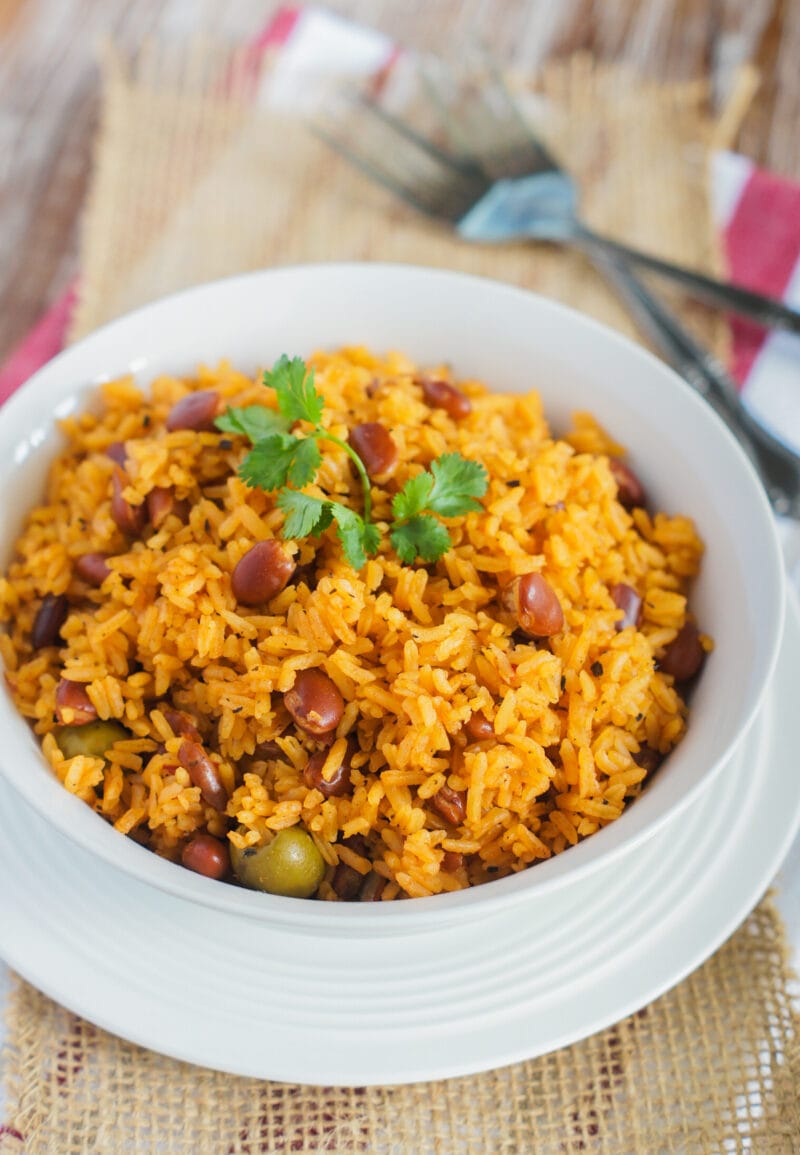
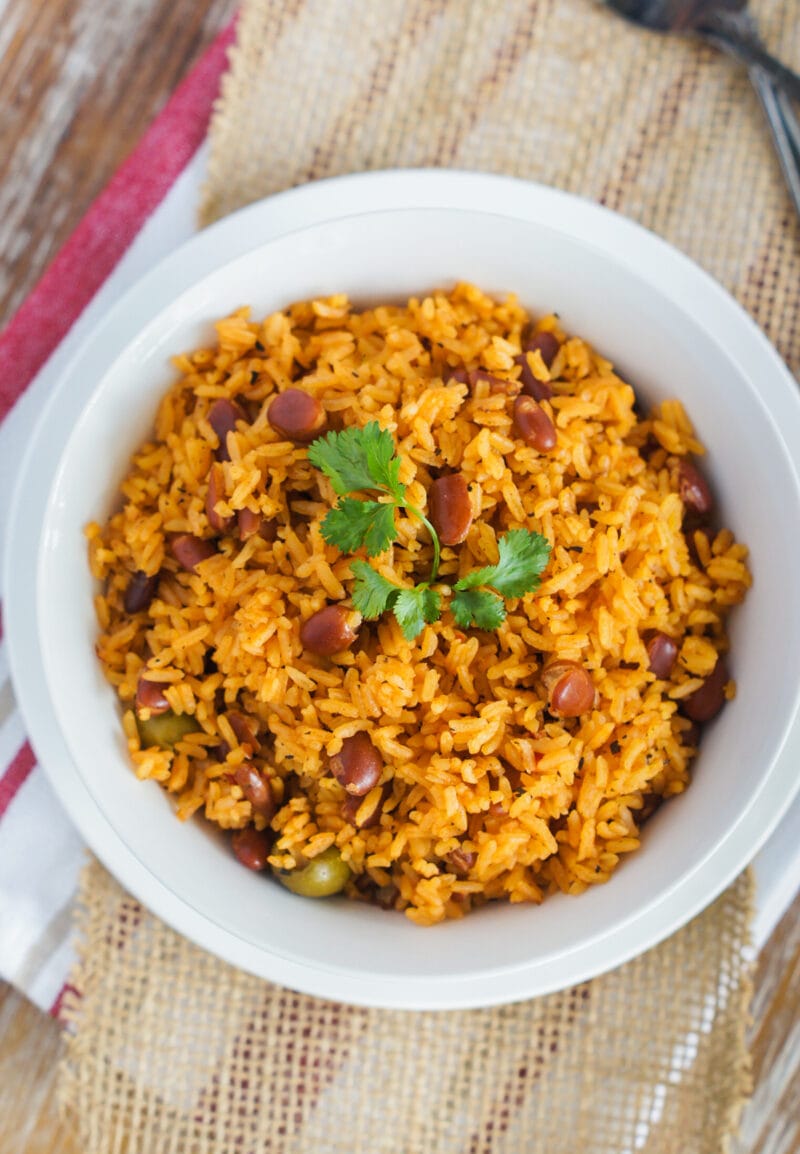
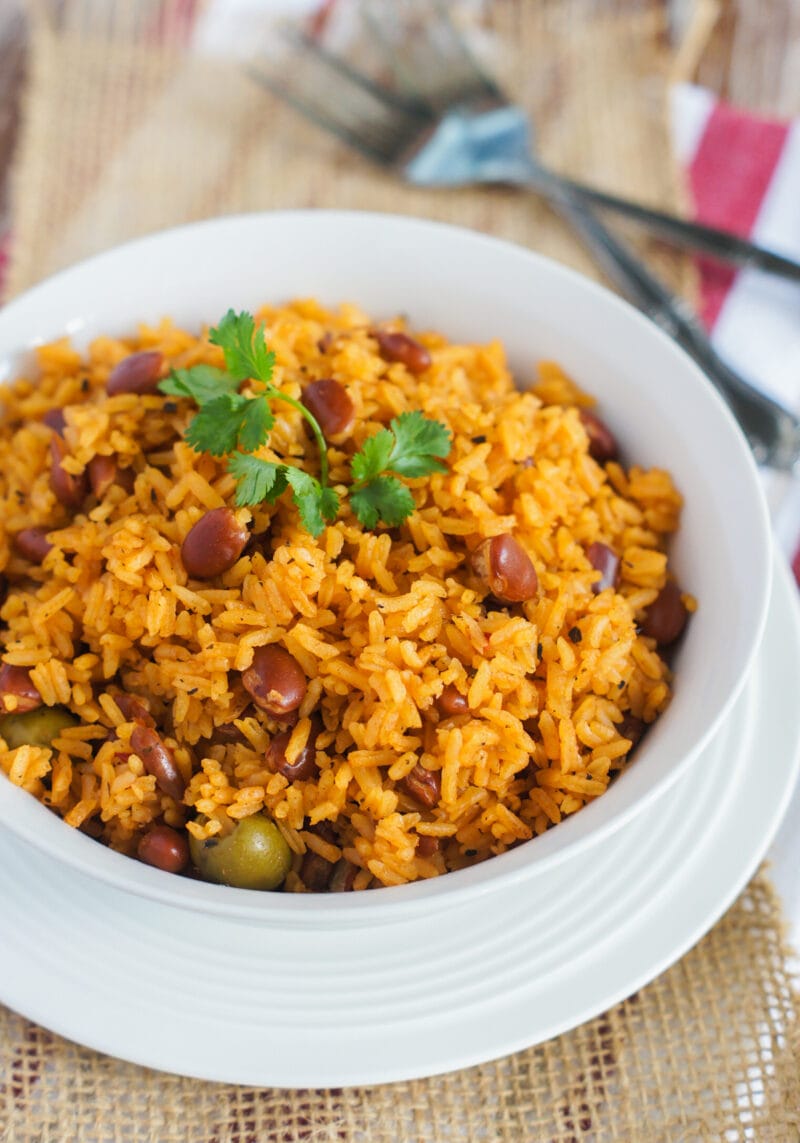
why do you have olives in the picture?.. but not in the recipe.
I wanted to include that in the rice.
Vanessa says
You can include the olives if you want. I do sometimes. 🙂
Maleka says
Very Tasteful
Vanessa says
Thank you!
Jackie says
LOVED!!!!!
Enriqueta E Lemoine says
Y el arroz con habichuelas, Miami me lo regalooooooooo! OMG Vane, this Moro con habichula recipe looks so yummy! I’m loving Dominican cuisine!
Monica Chic says
I love rice in all versions, especially this Dominican rice with
Yaimar Perez Nuñez says
Moro con habichuelas supongo que es lo mismo que arroz con frijoles aquí.
La verdad se ve muy bueno! Gracias por la receta!
Blanca D says
Talk about comfort food! I really like rice and beans!
Veronica says
Uy, I just want to be in Dominican Republic now enjoying this Moro de habichuelas!
Laura says
Una de mis recetas favoritas: Moro de habichuelas! Gracias por compartir.