






In a Dominican kitchen, a pot of rice always comes with a little anticipation—the best part isn’t always the rice itself… It’s what’s left at the bottom.
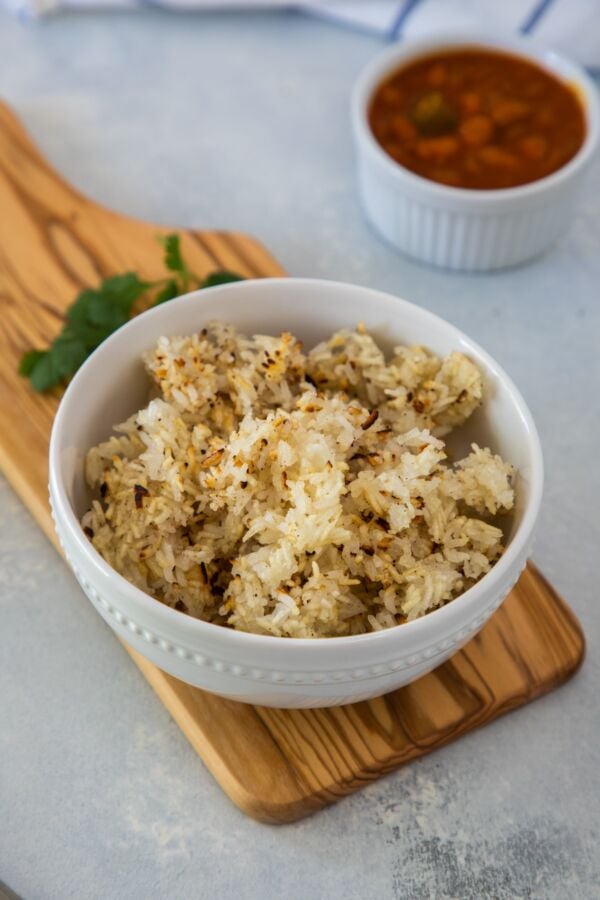
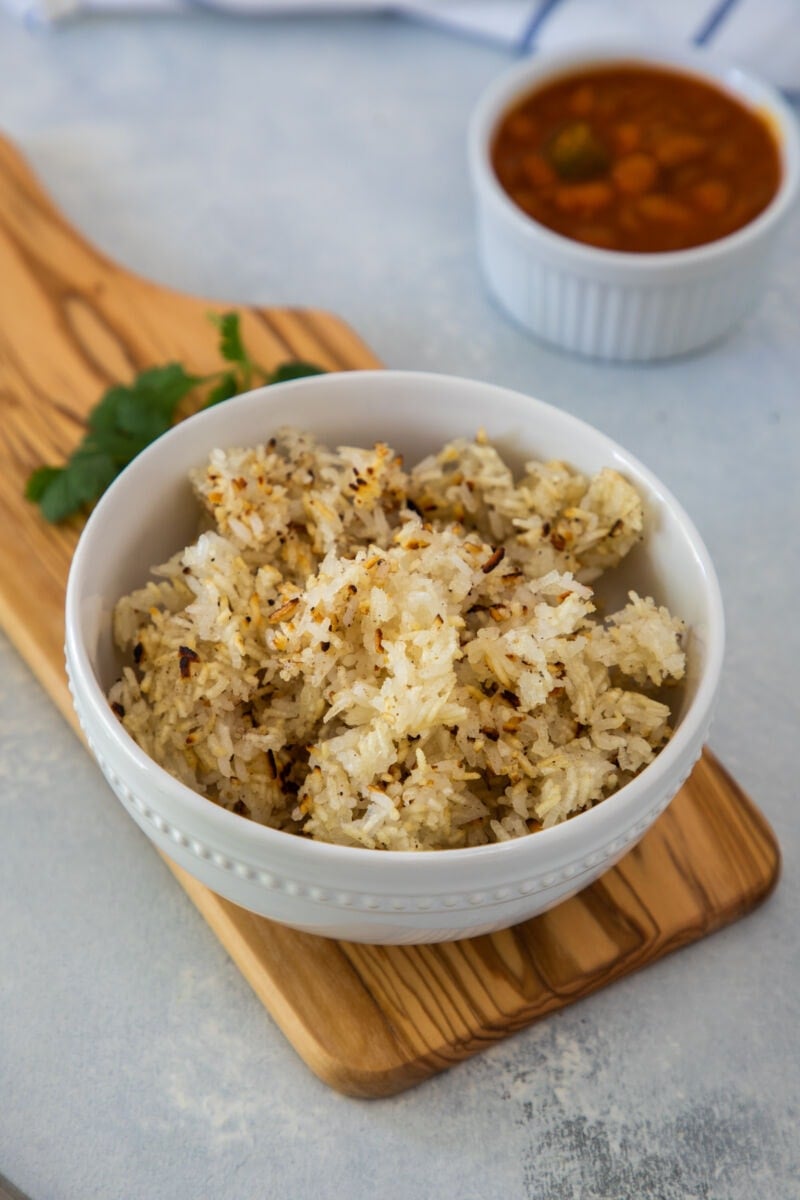
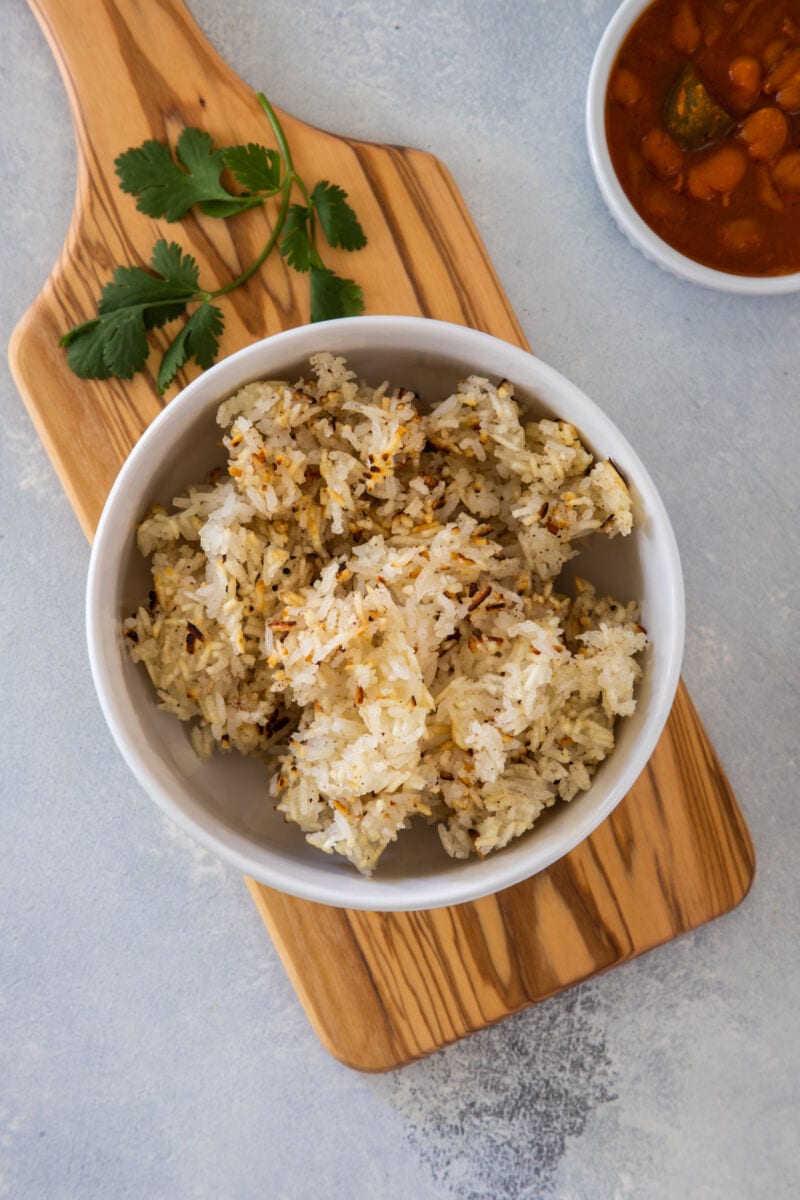
Concón is that crispy, golden layer that forms naturally when cooking rice in a caldero. It’s crunchy, toasty, and full of flavor, and in many Dominican homes, it’s the part everyone quietly hopes to get.
This isn’t a separate dish we go out of our way to make. It’s something that happens while you’re making White Rice or serving a full plate with Pollo Guisado (Dominican Stewed Chicken) and Habichuelas Guisadas—and somehow, it ends up being the most fought-over bite at the table.
Once you know how to control the heat and timing, you can make perfect concón every single time—crispy, golden, and never burnt.
How to Make Concón
Making concón starts the same way as making a traditional pot of Dominican white rice—but with one key difference: the heat.
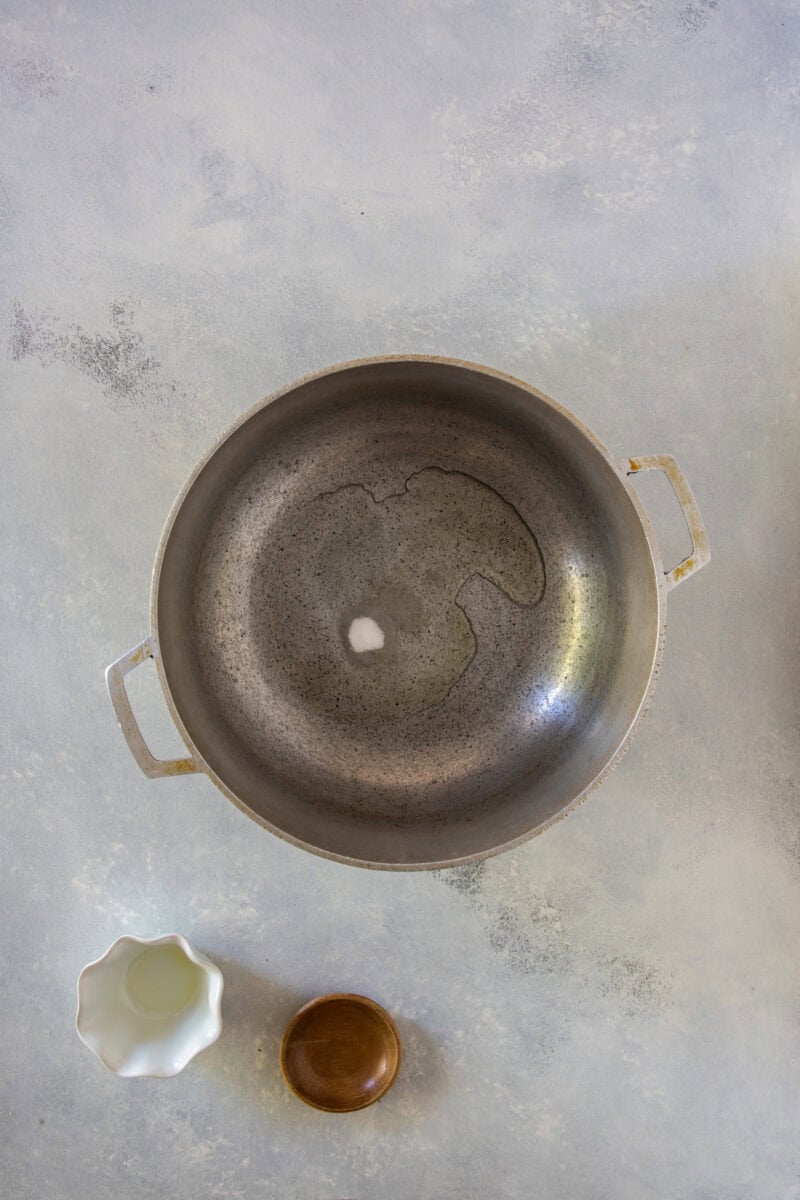
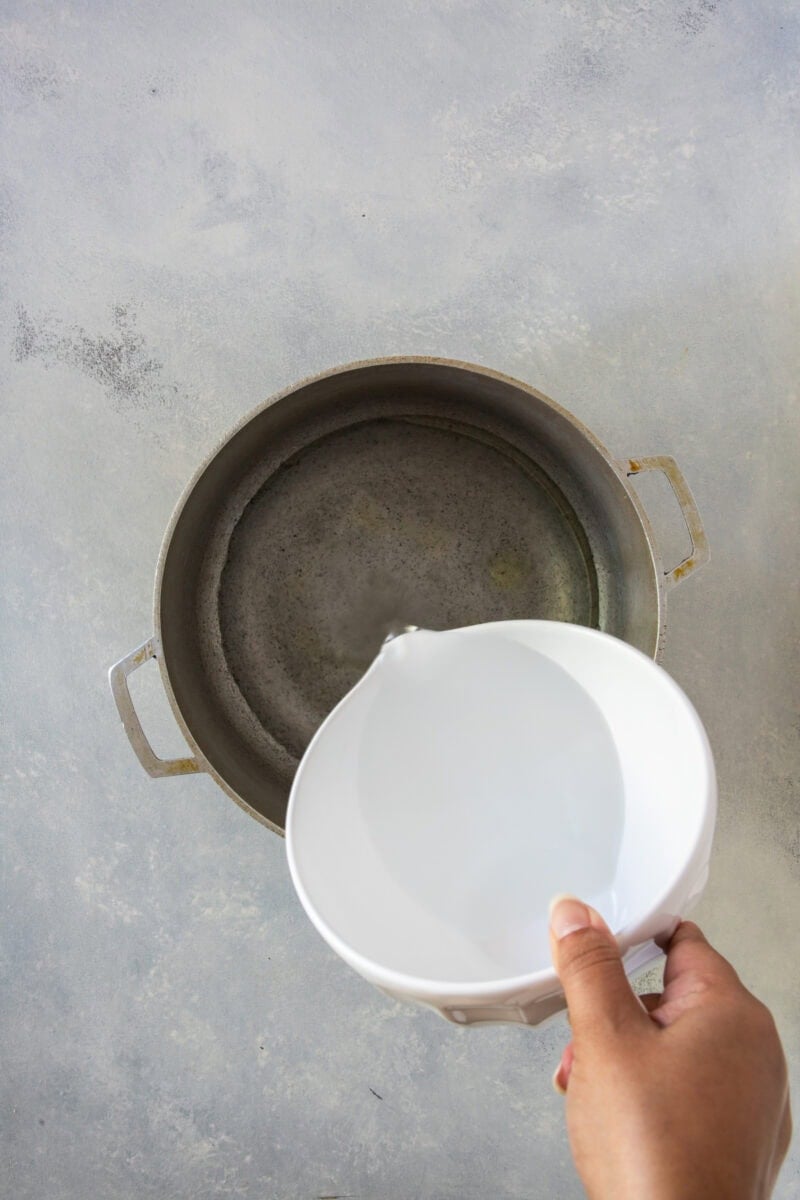
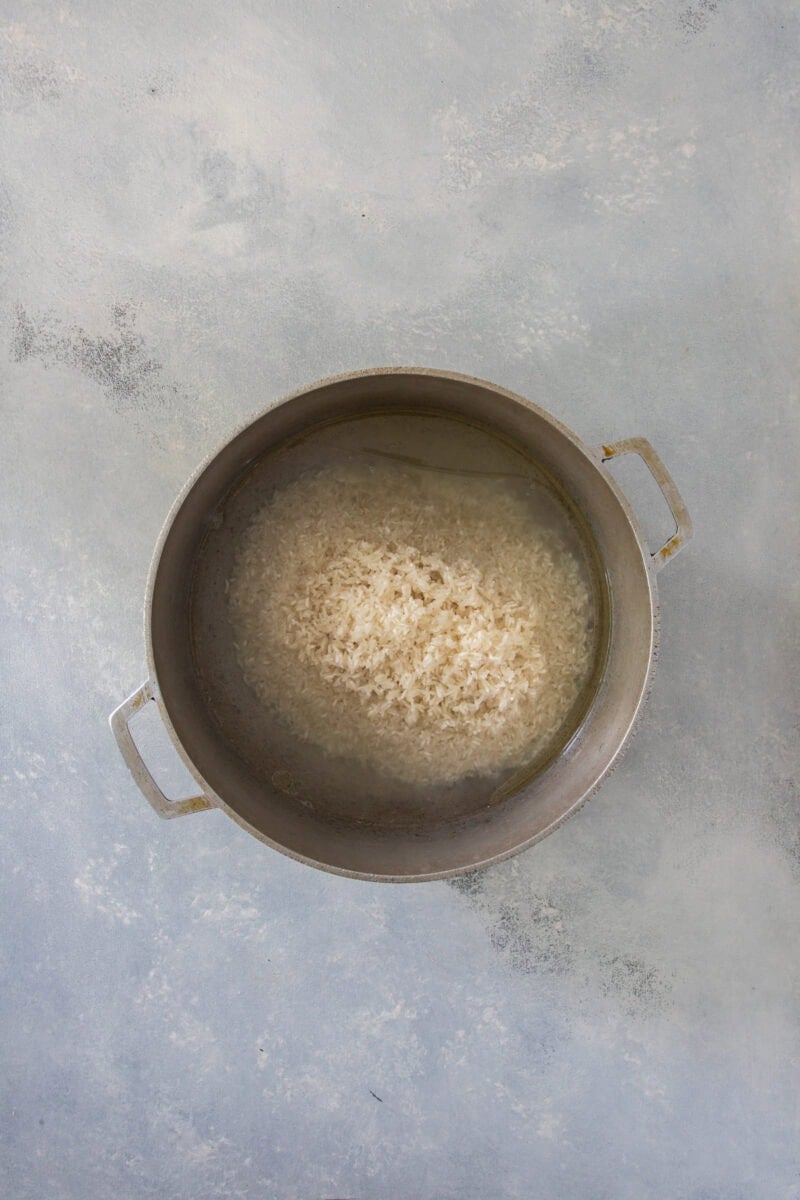
As the rice cooks and absorbs the water, a crust begins to form naturally at the bottom of the pot. You’ll begin by bringing the water, oil, and salt to a boil, then adding the rice and letting it cook over medium heat until the liquid is absorbed. At this stage, the rice will look soft but slightly dry on top—that’s exactly what you want.
Once covered, instead of lowering the heat all the way down (like you would for regular white rice), you’ll keep it at a low-medium heat. This slightly higher temperature is what allows the concón to form as the rice finishes cooking. Be careful not to raise the heat too much—if it gets too hot, the rice and the concón can burn instead of crisping properly.
As the rice steams, the bottom layer slowly toasts and crisps up. There’s no need to remove the rice early or cook the bottom layer separately—the concón develops naturally during this stage.
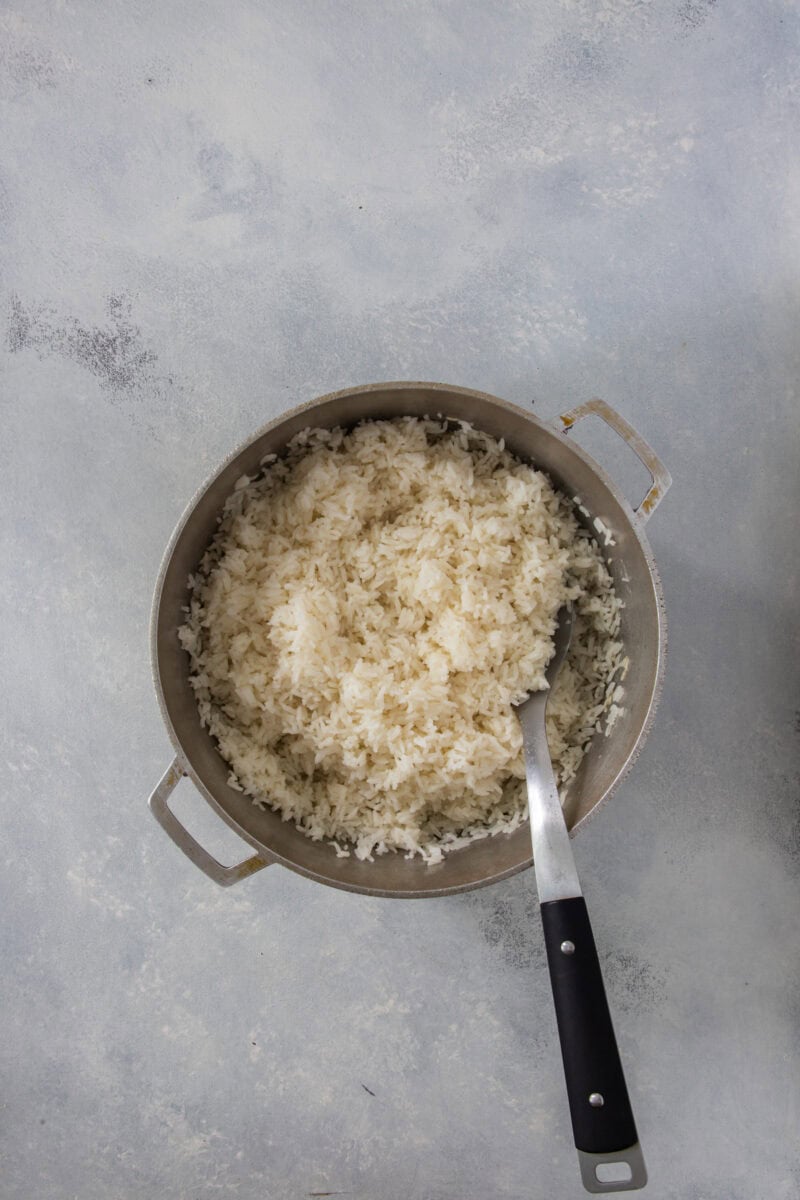
After the rice is fully cooked, fluff it gently and let it sit for a few more minutes. By this point, the concón should already be formed at the bottom.
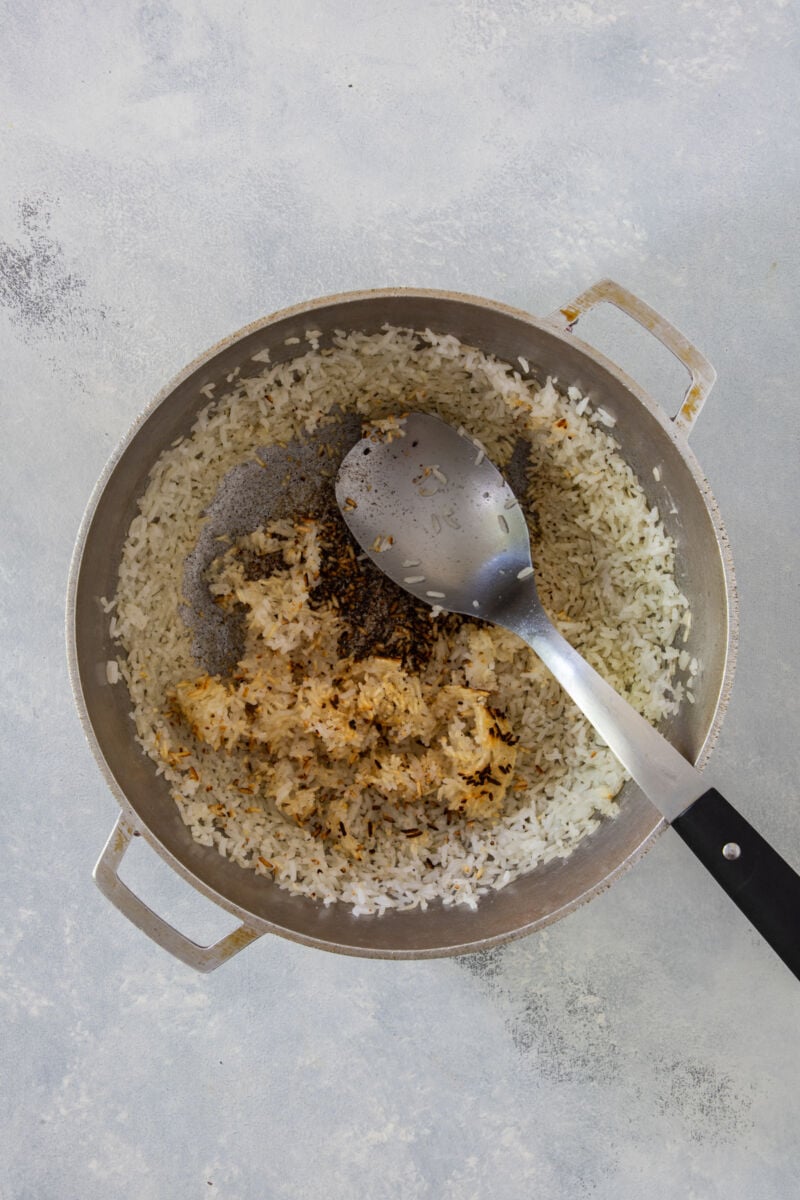
Then, remove the top layer of soft rice and set it aside. What’s left underneath is your concón—golden, crispy, and ready to be scraped up and served.
Serving Suggestions
Concón is a side, but let’s be honest—it steals the show.
It’s almost always served with saucy Dominican dishes that balance out the crispiness and add flavor to every bite. Some of the best pairings include:
- Pollo Guisado (Dominican Stewed Chicken)
- Habichuelas Guisadas (Stewed Dominican Beans)
- Camarones Guisados (Stewed Shrimp)
- Rabo Encendido (Dominican Oxtail Stew)
You’ll also find concón forming naturally when making dishes like Moro de Habichuelas Rojas, where the rice cooks together with beans and seasonings—creating an even more flavorful crispy layer at the bottom.
Storage Tips
Concón is best enjoyed fresh, right after it’s made. That’s when it’s at its crispiest.
Once the rice and concón are done, it’s important to remove them from the pot fairly quickly. If you turn off the heat and leave the rice covered in the pot, the trapped steam will soften the concón and it can lose its crisp texture.
If you do have leftovers, you can store them in an airtight container in the fridge for up to a few days. Just keep in mind that the texture will change as it sits.
To reheat, use a pan on the stovetop to help bring back some of that crispiness. The microwave will warm it through, but it won’t give you the same texture.
Recipe Tips
- Keep a close eye on the heat during the final step. This is where concón can go from perfectly golden to burnt pretty quickly. Avoid turning the heat too high—concón needs steady heat to crisp, not aggressive heat that will burn it.
- Listen for the sound. That gentle crackling is one of the best indicators that your concón is developing properly.
- Don’t let it sit too long in the pot after it’s done. Removing it right away helps keep that crisp texture instead of turning chewy.
- And if you have a caldero, use it. It really does make a difference in how the concón forms and releases from the bottom.

Concón (Dominican Crispy Rice)
Author:Equipment
- 1 Caldero
Ingredients
- 2 tablespoons vegetable or corn oil (30 ml)
- ¾ teaspoon salt (4 g)
- 3 ½ cups water (830 ml)
- 3 cups long-grain white rice, rinsed and drained (600 g)
Instructions
- In a caldero or heavy-bottomed pot, combine the oil, salt, and water over medium-high heat. Bring to a boil.
- Add the rice and stir gently to distribute evenly. Cook over medium heat, stirring occasionally, until the water has been absorbed and the rice begins to dry out, about 10 minutes.
- Cover the pot and reduce the heat to low-medium. Cook undisturbed for 25 minutes, allowing the rice to steam and a crust to begin forming at the bottom.
- After 25 minutes, fluff the top portion of the rice with a spoon. Cover again and cook for an additional 5 minutes to finish steaming and deepen the crust.
- Remove the soft rice from the top and set aside, leaving the bottom layer in the pot.
- Increase the heat slightly to medium and cook for 2 to 5 minutes, until the bottom layer becomes golden and crispy. Listen for a light crackling sound and watch closely to prevent burning.
- Remove from heat. Use a spoon to carefully scrape and lift the concón from the bottom of the pot.
- Serve warm.
Video
Notes
- Watch the heat closely during the final step to avoid burning the concón. Keep it at a controlled low-medium heat—too high and the rice and concón will burn instead of crisping.
- Remove the concón soon after cooking to keep it crispy. Letting it sit too long can make it chewy.
- A caldero produces the best texture and flavor, but a non-stick pot will yield a lighter, easier-to-release concón.
Nutrition
The nutritional information of this recipe and all recipes on mydominicankitchen.com is only an estimate. The accuracy of any recipe on this site is not guaranteed.




 Follow Me on Facebook
 Follow Me on Instagram
Let us know your thoughts!