






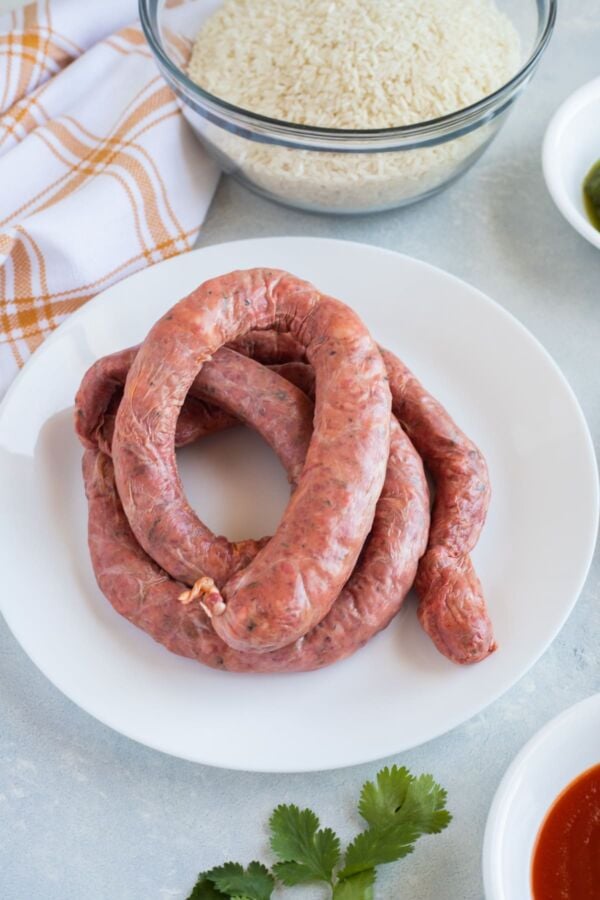


There’s a smell that’s hard to forget in a Dominican kitchen. That deep, savory, garlicky aroma of something sizzling in the caldero. More often than not, longaniza is involved. It’s one of the most beloved ingredients in Dominican cooking, and once you know what it is and how to use it, it tends to show up everywhere.
This guide covers everything: what longaniza is, how it differs from other sausages, where it comes from, how Dominicans cook it, and where to find it. By the end, you’ll know exactly what to look for and what to do with it. And if you’re ready to start cooking, my Longaniza Frita – Crispy Dominican Sausage in 12 Minutes is the perfect place to begin.
What is Longaniza?
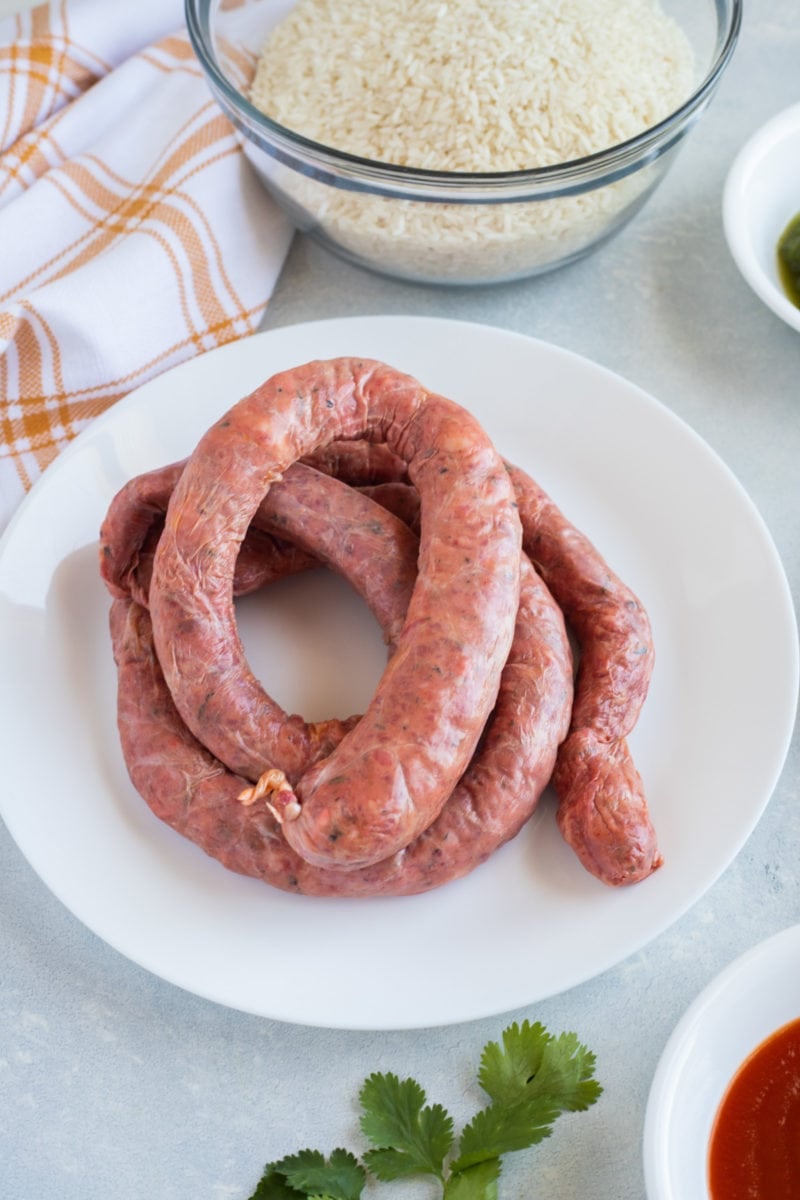
Longaniza is a seasoned, cured pork sausage with roots in Spanish cuisine that has traveled across Latin America and the Caribbean, taking on a slightly different character in each place it landed. The Dominican version is long and thin, with a firm texture from the curing process and a bold, savory flavor that comes from a specific blend of aromatics: mainly garlic, bitter orange, and Dominican oregano.
It is not the same as chorizo, and it’s not the same as fresh breakfast sausage. It has its own distinct identity, and once you’ve tried it, you’ll understand why Dominicans are particular about it.
Longaniza vs. Chorizo: What’s the Difference?
This is the question that comes up most often, and it’s a fair one. Both are cured pork sausages with Spanish origins, so the confusion makes sense. But they’re seasoned very differently and have distinct textures and flavor profiles.
Chorizo gets its signature flavor from smoked paprika, which gives it that deep red color and smoky taste. Dominican longaniza is seasoned with garlic, bitter orange, and oregano, which gives it a bright, savory flavor without the smokiness.
The texture is also different. Dominican longaniza is firm and chewy from the curing process, while chorizo tends to be softer and more crumbly when cooked. When you bite into a piece of fried longaniza, you get that satisfying snap from the casing. That’s not something you get with chorizo.
The short version: chorizo tastes like paprika and smoke. Longaniza tastes like garlic, citrus, and oregano. Both are delicious, but they are not interchangeable in Dominican recipes.
Where Does Longaniza Come From?
Longaniza originated in Spain and traveled to Latin America and the Caribbean through Spanish colonization. Today you’ll find versions of it in the Dominican Republic, Puerto Rico, Mexico, Chile, Argentina, Uruguay, and even the Philippines, where it arrived through Spanish colonial influence as well.
Each country has developed its own version over time. In Argentina and Uruguay, longaniza is often seasoned with anise seeds. In the Philippines, it tends to be sweeter. In Puerto Rico, it’s made with sofrito and recao.
The Dominican version is defined by its curing process and its seasoning: garlic, bitter orange juice, oregano, and salt. That combination is what makes it taste the way it does, and it’s also what makes it so good when fried. The garlic and citrus caramelize slightly in the pan and give you a depth of flavor that’s hard to replicate with any other sausage.
How to Cook Dominican Longaniza
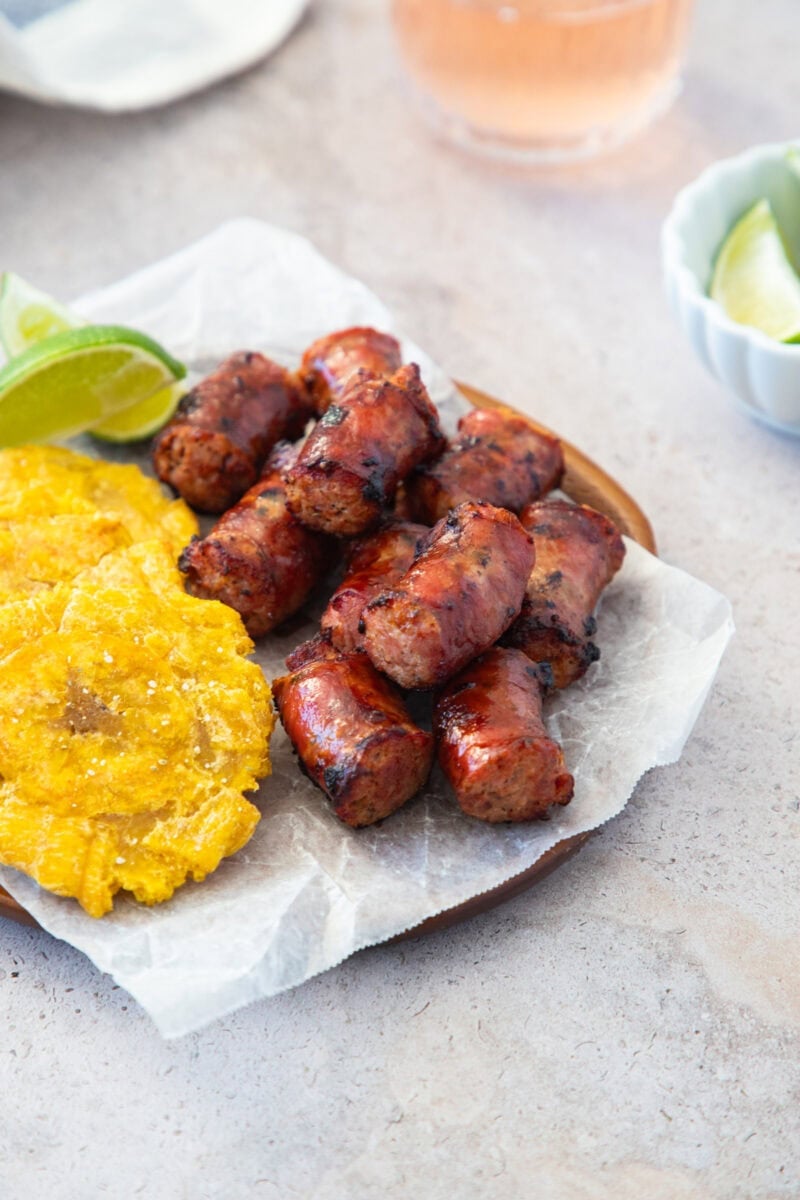
The most common way to cook Dominican longaniza is to fry it, either on the stovetop in a caldero or in the air fryer. Both methods give you that crispy exterior and juicy interior that makes it so satisfying.
For the stovetop method, cut the longaniza into 1-inch pieces and fry in hot oil over medium-high heat for about 4 minutes, turning occasionally until golden and crispy on all sides. For the air fryer, cook at 400°F for about 7 minutes, flipping halfway through.
You can also bake it at 400°F for 12 to 15 minutes if you prefer a hands-off method.
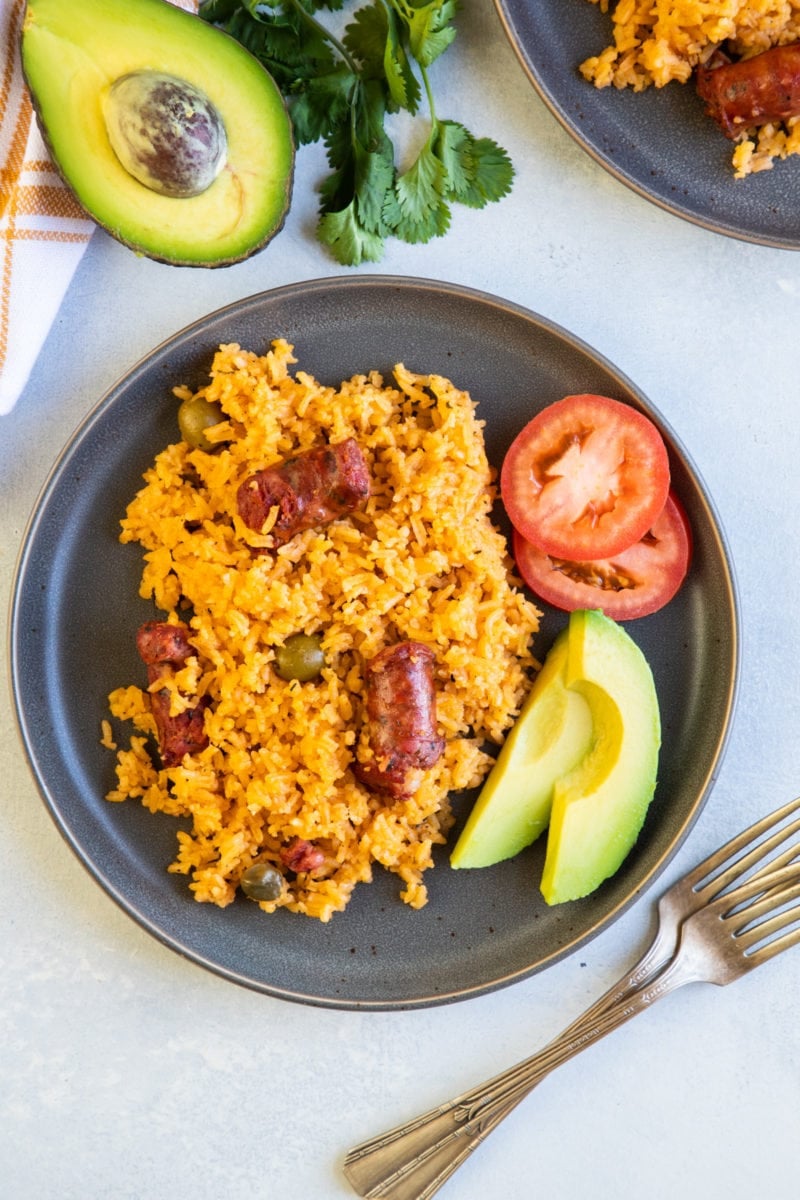
The full step-by-step instructions, including both methods and tips for getting it perfectly crispy, are in my Longaniza Frita – Crispy Dominican Sausage in 12 Minutes recipe. And if you want to use longaniza in a rice dish, my Locrio de Longaniza (Dominican Rice with Sausage) is a one-pot meal that’s hard to beat.
How Dominican Longaniza Is Served
In the Dominican Republic, longaniza is served at almost any time of day and fits into almost any meal. These are the most common ways you’ll see it on the table:
- As part of Los Tres Golpes (Dominican Breakfast Plate), alongside mangú, fried cheese, and salami
- Paired with Mangú (Dominican Mashed Plantains) for a simple, satisfying plate
- Served with Tostones (Fried Green Plantains) as the classic picalonga combination
- Cooked into Locrio de Longaniza (Dominican Rice with Sausage) for a full one-pot meal
- Alongside White Rice (Arroz Blanco) and Authentic Dominican Beans for an everyday plate
It can also be used as a substitute for salami in many dishes, wherever you want that bolder, more savory flavor from the longaniza instead.
Where to Find Dominican Longaniza
Quality matters a lot with longaniza. Not all brands taste the same, and a poor-quality longaniza can be overly salty, too greasy, or missing that authentic flavor.
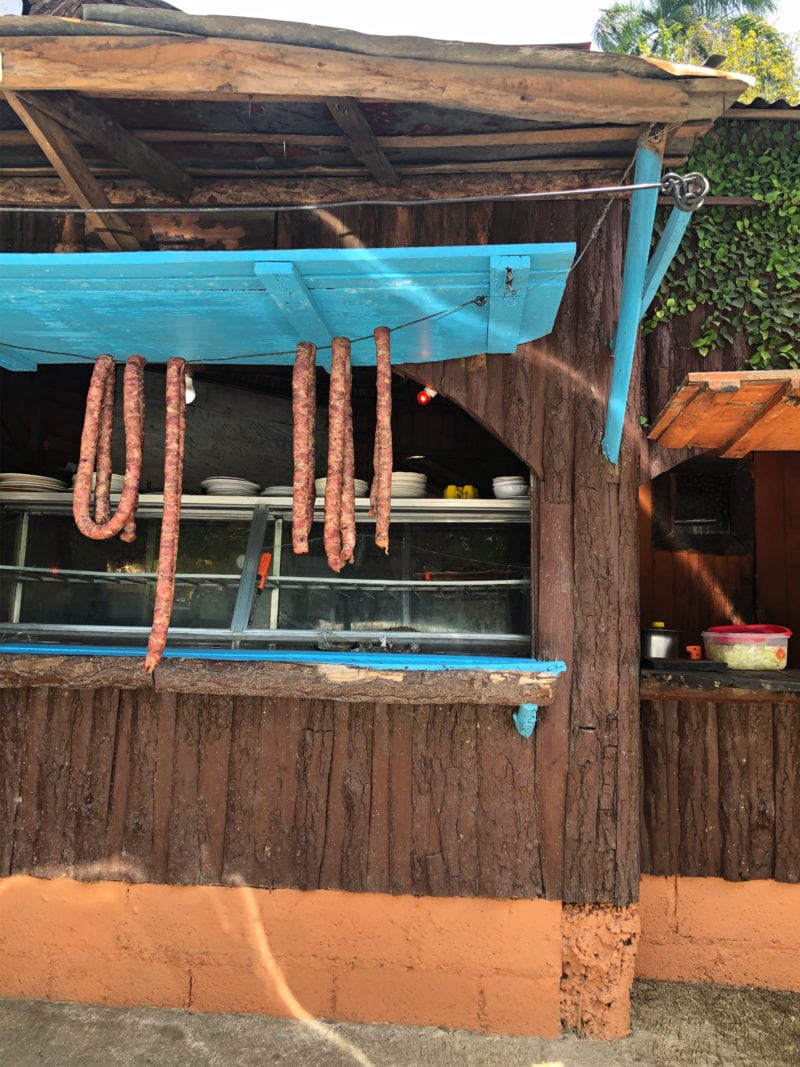
The best longaniza, as any Dominican will tell you, comes straight from the Dominican Republic. But for those of us outside the island, here’s where to look:
- Latin grocery stores and bodegas are your best bet. Look for it in the refrigerated meat section or near the butcher counter. Ask for Dominican longaniza specifically.
- Large supermarkets with a Hispanic foods section sometimes carry it, though selection varies by location.
- You can also order online. Some retailers ship Dominican-style cured longaniza directly to your door if you can’t find it locally.
When shopping, look for cured Dominican pork longaniza. Avoid fresh longaniza if you’re making recipes like Longaniza Frita – Crispy Dominican Sausage in 12 Minutes. The texture and cooking time are different, and you won’t get the same result.



 Follow Me on Facebook
 Follow Me on Instagram
Let us know your thoughts!