






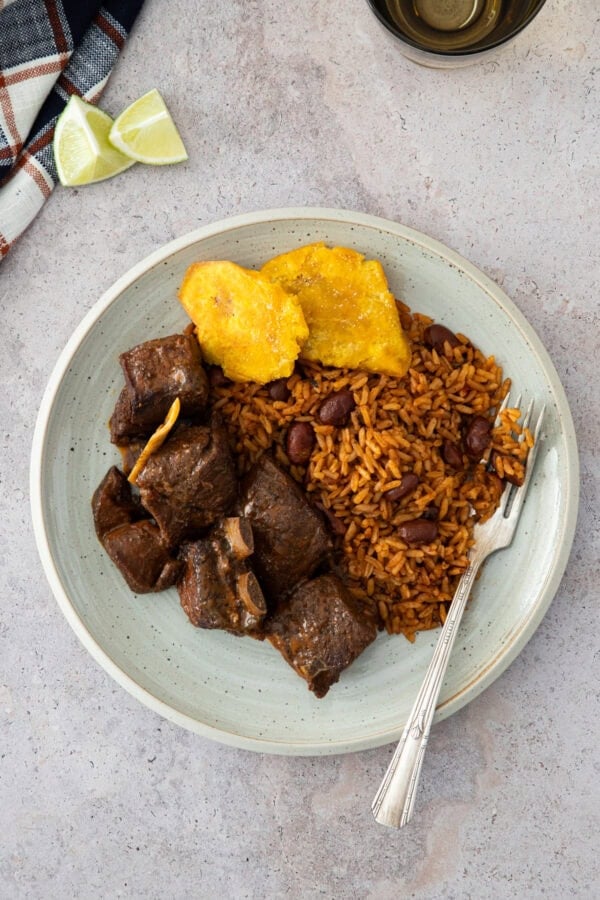


Chivo guisado is one of those dishes that feels like a moment.
It’s the kind of meal that shows up at family gatherings, Sunday lunches, or special occasions where the food matters just a little bit more. The aroma alone—garlic, oregano, citrus, and that deep, slow-cooked richness—lets you know something good is happening in the kitchen.
In Dominican cooking, goat isn’t something we rush. It takes time, patience, and the right balance of sazón to get it just right. That long simmer is what transforms the meat into something tender, flavorful, and completely worth it.
If you enjoy rich, slow-cooked dishes like my Pollo Guisado recipe or hearty stews like Sancocho Dominicano, this is one recipe you’re going to want to master.
And of course, no plate of chivo guisado is complete without a side of fluffy Arroz Blanco or Moro de Habichuelas to soak up every bit of that sauce.
Step-by-Step Instructions
Start by rinsing the goat meat with lime or lemon juice. This step is key—it helps clean the meat and adds that subtle brightness that balances the richness later on. Drain well and set aside.
In a pilón or mortar and pestle, mash the garlic, ají gustoso, salt, and oregano into a coarse, fragrant paste. This is your base flavor, and it should smell bold and aromatic.
Place the goat meat in a large bowl and coat it with the garlic mixture. Add the adobo, black pepper, bitter orange juice, and rum, then mix everything well so the meat is fully seasoned. Cover and let it marinate for at least 4 hours, but overnight is where the magic really happens.
When you’re ready to cook, heat the oil in a large caldero over medium-high heat. Add the marinated meat, reserving the marinade, and let it cook undisturbed at first. The meat will release its juices—this is exactly what you want.
Let it cook down slowly, stirring occasionally, until most of that liquid evaporates and the meat begins to brown and develop deeper flavor—similar to the technique used in Rabo Encendido.
Once the meat starts to sear, pour in the reserved marinade along with the water. Stir, reduce the heat to medium, and let it simmer gently.
Over the next 45 minutes, keep an eye on it. Stir occasionally and add more water as needed to keep the meat cooking in liquid. The goal here is tender, fall-apart goat with a rich, reduced sauce.
Toward the end, add the tomato sauce, sliced peppers, onions, fresh tomato, culantro, and olives. Let everything cook together until the vegetables soften and the sauce thickens slightly.
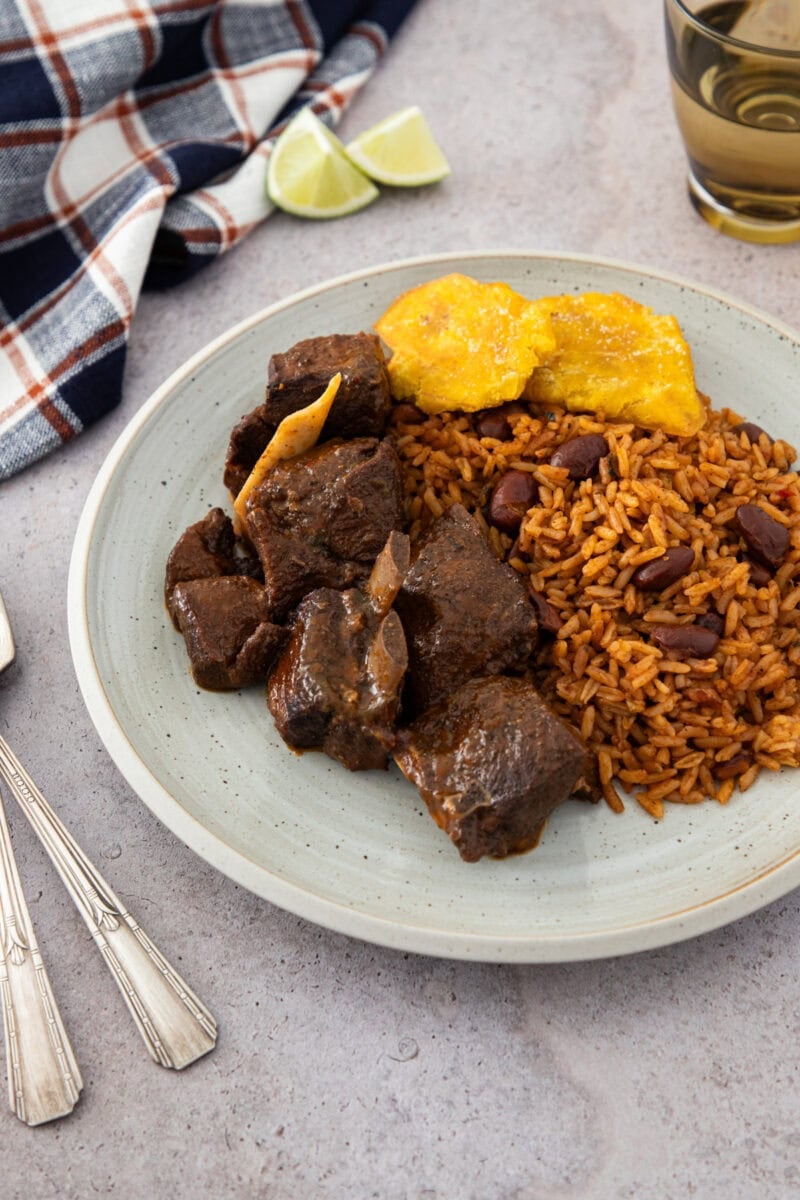
By the time it’s done, the meat should be deeply flavored, tender, and coated in a rich, savory sauce.
Serving Suggestions
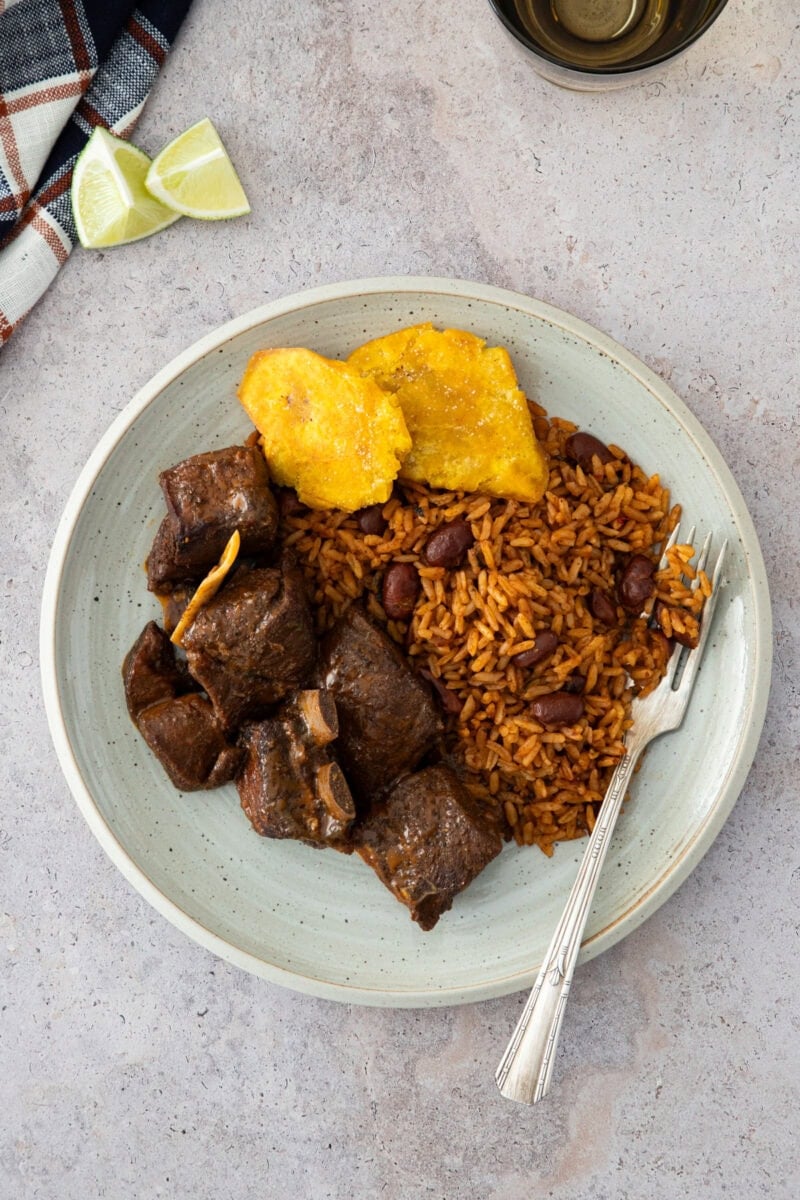
Chivo guisado is best served hot, with something simple on the side to balance all that flavor.
A classic plate would include:
- A generous serving of Arroz Blanco or Moro de Habichuelas
- A side of Tostones for a little crunch
- Or sweet Maduros if you want that sweet-savory contrast
- Even a little Mangú or Boiled Yuca with Sautéed Onions pairs well with this dish
Add a light Ensalada Verde or Ensalada de Aguacate to round things out. This is one of those meals where you build the plate your way.
Storage Tips
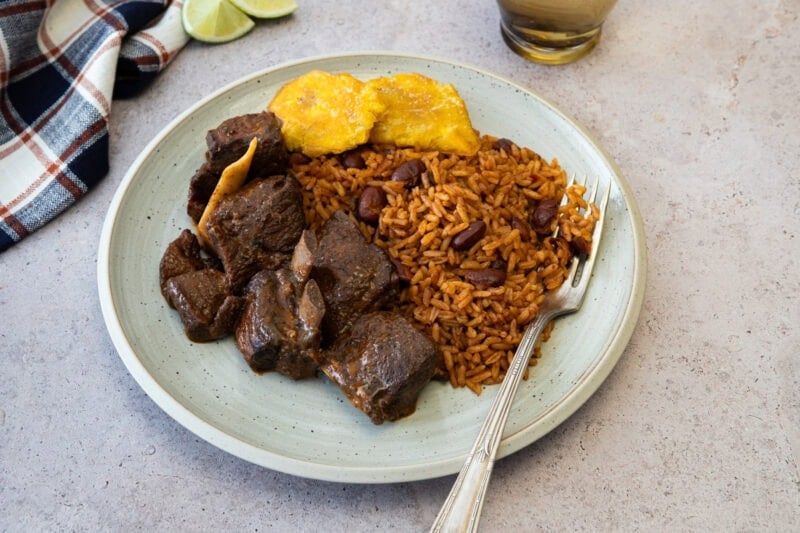
Let the chivo cool completely before storing.
- Store in an airtight container in the refrigerator for up to 3–4 days
- Reheat on the stovetop over medium-low heat, adding a splash of water if needed to loosen the sauce
- This dish actually tastes even better the next day as the flavors continue to develop
You can also freeze it for up to 2 months. Just thaw overnight in the fridge before reheating.
Recipe Tips
- Don’t skip the marinating time. This is where the flavor really builds. Overnight is ideal.
- Cook it low and steady. Goat needs time to become tender—rushing it will leave the meat tough.
- Control your liquid. Add water gradually to keep the sauce rich, not watery.
- Balance the flavor. Bitter orange and rum give this dish its signature depth—don’t skip them if you can help it.
- Taste at the end. Depending on your adobo, you may need to adjust the salt.
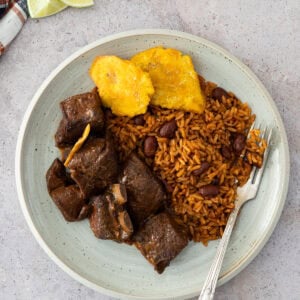

Chivo Guisado (Dominican Braised Goat)
Author:Equipment
- 1 Pilón
Ingredients
- 5 pounds goat meat, cut into 2-inch cubes (2.3 kg)
- ¼ cup lime or lemon juice (60 ml)
- 10 garlic cloves
- 3 medium ají gustoso peppers, seeded
- 1 ½ teaspoons salt (9 g)
- 2 tablespoons dried oregano (6 g)
- 2 teaspoons adobo seasoning (10 g)
- 1 tablespoon ground black pepper (7 g)
- ⅓ cup bitter orange juice (80 ml)
- ½ cup rum, dark or white (120 ml)
- ¼ cup vegetable oil (60 ml)
- 3 cups water (720 ml), plus more as needed
- ½ cup tomato sauce (120 ml)
- ½ medium cubanelle or bell pepper, sliced
- ½ medium red onion, sliced
- 1 plum tomato, cubed
- 3 culantro leaves, roughly chopped
- ¼ cup pitted olives (40 g)
Instructions
- Rinse the goat meat in cool water with the lime or lemon juice. Drain well and set aside.
- In a pilón or mortar and pestle, mash the garlic, ají gustoso peppers, salt, and oregano into a coarse paste.
- Place the meat in a large bowl. Add the garlic paste, adobo, black pepper, bitter orange juice, and rum. Mix well to coat. Cover and marinate in the refrigerator for at least 4 hours, preferably overnight.
- Continue cooking, stirring occasionally, for about 25 to 30 minutes, or until most of the liquid has evaporated and the meat starts to sear.
- Add the reserved marinade and 3 cups of water. Stir to combine.
- Reduce the heat to medium and simmer, stirring occasionally, for about 45 minutes. Add additional water, 1 cup at a time, as needed to keep the meat cooking in liquid. Cook until the sauce reduces and the meat is very tender.
- Stir in the tomato sauce, sliced pepper, onion, tomato, culantro, and olives. Cook for 10 to 15 minutes, or until the vegetables are softened and the sauce thickens.
- Serve warm.
Notes
- Rum can be substituted with beer or red wine for a different flavor profile.
- Marinating overnight will give you the most flavorful results.
- Adjust salt after cooking if needed, especially depending on the adobo used.
Nutrition
The nutritional information of this recipe and all recipes on mydominicankitchen.com is only an estimate. The accuracy of any recipe on this site is not guaranteed.





 Follow Me on Facebook
 Follow Me on Instagram
Let us know your thoughts!