






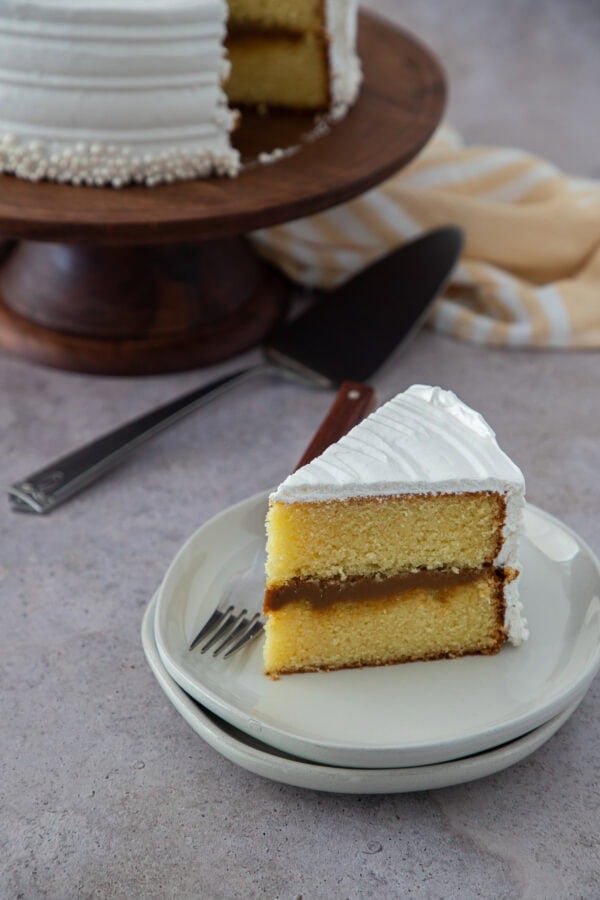

Dominican Cake (Bizcocho Dominicano) has a way of turning any regular day into a fiesta. One slice takes me straight to birthdays, bautizos, and those family gatherings where somebody always shows up carrying a cake box like it’s a treasure chest. This is the kind of dessert that feels like home. It’s moist, fluffy, and perfumed with orange and vanilla, with that iconic Dominican suspiro (meringue frosting) piled on top.

And since Dominican households never do sweets halfway, this cake fits right in alongside other favorites like my Coconut Tres Leches Cupcakes, Almond Cupcakes with Cream Cheese Frosting, or Chocolate Tres Leches Cake—different vibes, same “save me a second piece” energy. Traditionally, bizcocho is filled with pineapple marmalade, but this version leans into my personal favorite: dulce de leche, because, honestly… Who can resist?
Step-by-Step Instructions
Start by preheating the oven to 350°F (175°C) and getting your pans ready. Grease two 8-inch round baking pans with butter and set them aside so the batter can go straight in once it’s mixed.
Cream the softened butter with a mixer until it’s smooth, then add the sugar slowly and keep beating until the mixture turns pale, fluffy, and creamy. This step is what helps Dominican Cake get that light, airy crumb. Add the eggs one at a time, beating after each addition so everything blends in evenly.
In a separate bowl, sift together the flour, baking powder, and salt. Add the dry ingredients to the mixer slowly, alternating with the orange juice and vanilla, mixing just until the batter comes together. Stir in the orange peel and keep the mixing gentle. Overmixing is the quickest way to lose that soft, tender texture.
Divide the batter evenly between the two pans and bake for 35–40 minutes, until a toothpick inserted in the center comes out clean. Let both layers cool completely on a rack before filling and frosting. This part matters because warm cake will melt the filling and the meringue.
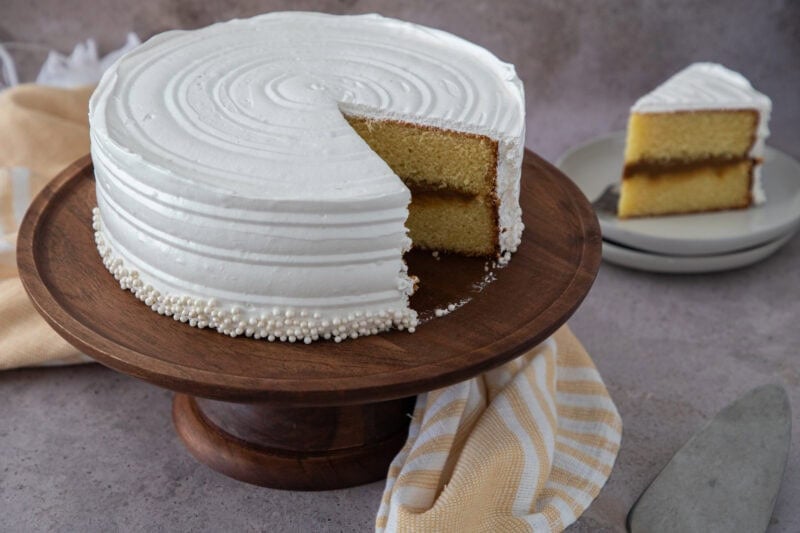
To make the frosting (suspiro), combine the sugar and water in a saucepan and boil over medium heat for about 20–30 minutes, until it turns into a syrupy thread. A good test is lifting a spoon from the syrup. Once it drips in a steady, threadlike stream, it’s ready.
Right before the syrup finishes, start beating the egg whites and cream of tartar on low speed, then increase to high until soft peaks form. Slowly pour the hot syrup into the egg whites in a thin stream while continuing to beat on high. Keep mixing for 5–8 minutes until the bowl cools down and stiff peaks form.
Add the white vanilla extract and lime juice, then continue beating for about 5 more minutes until the meringue is fully cool, glossy, and holds strong peaks. This is that classic Dominican suspiro look.
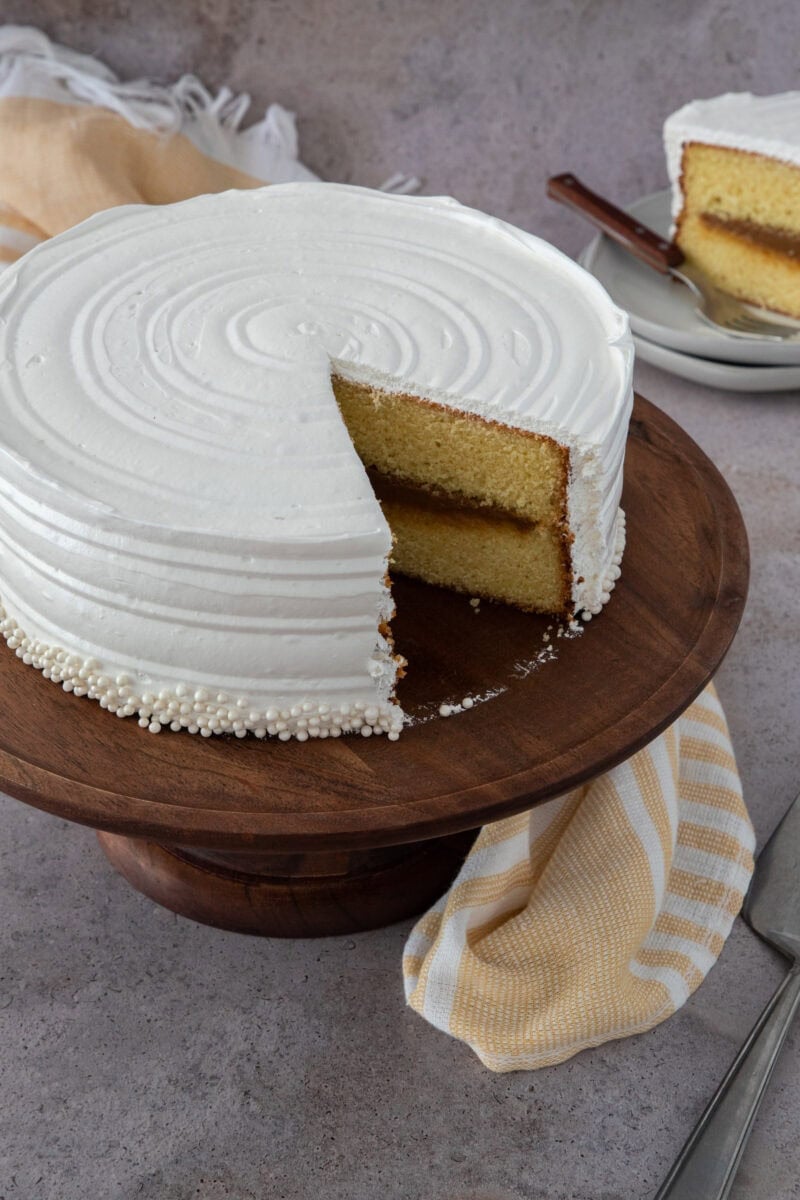
To assemble, level the tops of both cake layers. Place one layer on a cake stand or plate, pipe a ring of meringue around the edge, and spread the dulce de leche filling in the center. Add the second layer on top, then frost the top and sides with the remaining meringue and decorate however you like.

Serving Suggestions
- Serve Dominican Cake at room temperature for the softest, fluffiest bite (that butter-based crumb stays tender this way).
- For birthdays and celebrations where you want variety without building a whole dessert table, pair it with another sweet option like my Coconut Tres Leches Cupcakes or Almond Cupcakes with Cream Cheese Frosting—easy to grab, pretty on a platter, and perfect for parties.
- Chocolate lovers usually go straight for my Chocolate Tres Leches Cake as a “second dessert” moment, especially when the crowd wants something richer and cocoa-forward next to the light, airy bizcocho.
Storage Tips
- Best texture: Keep the cake at cool room temperature and serve the same day when possible.
- Refrigerator: Store covered in the fridge for up to 3 days (note: the cake will feel firmer once chilled).
- To serve after chilling: Let slices sit at room temperature until soft again before eating.
Recipe Tips
- Room temp matters: This cake truly shines when served at room temperature. Refrigeration can make the crumb feel dry because the butter firms up (totally normal for butter cakes).
- Filling options: Pineapple marmalade is the traditional filling, but guava (guayaba) and dulce de leche are popular Dominican favorites too.
- Quick consistency check: For the syrup, that thread-like drip is the goal. Without it, the suspiro can turn loose and won’t hold its shape.

Bizcocho Dominicano (Dominican Cake)
Author:Equipment
- 1 Saucepan
Ingredients
- For the Cake
- 1 cup 226 g unsalted butter, softened
- 2 cups 400 g granulated sugar
- 6 large eggs
- 3 cups 360 g all-purpose flour
- 3 teaspoons 12 g baking powder
- ¼ teaspoon 1.5 g salt
- ¾ cup 180 ml orange juice
- 1 teaspoon 5 ml vanilla extract
- 1 teaspoon 2 g orange peel (zest)
- 1 can dulce de leche about 13.4 ounces (380 g, or similar)
- For the Frosting Suspiro
- 1 ½ cups 300 g granulated sugar
- 1 cup 240 ml water
- ½ cup 120 g egg whites (about 4 large eggs)
- ⅛ teaspoon 0.3 g cream of tartar
- 1 teaspoon 5 ml white vanilla extract
- ½ teaspoon 2.5 ml fresh lime juice
Instructions
- Preheat the oven to 350°F (175°C).
- Grease two 8-inch round baking pans with butter. Set aside.
- Cream the butter using a stand or hand mixer. Add the sugar slowly and continue beating until the butter turns pale yellow and creamy.
- Pour the eggs into the mixer one at a time, beating after each addition until all of the eggs are well incorporated.
- Sift the flour, baking powder, and salt together in a separate bowl.
- Slowly add the flour mixture to the mixer alternating with the orange juice and vanilla. Add the orange peel and continue to mix until all ingredients incorporate. Do not overmix the batter.
- Transfer the batter to the baking pans adding half of the batter to each pan. Bake for 35–40 minutes, or until a toothpick inserted in the center comes out clean.
- Remove from the oven and let it cool completely on a cooling rack before filling and frosting.
- To make the frosting
- Mix sugar and water in a medium saucepan. Boil over medium heat for about 20–30 minutes, or until it reaches the consistency of syrup. To know if the syrup is ready, insert a spoon into the syrup and lift it up. If it drips in a consistent stream that looks like a thread, the syrup is ready. It’s important that the syrup is at the point or your meringue won’t have the right consistency.
- About 4–5 minutes before the syrup is ready, start beating the egg whites and cream of tartar in a stand mixer using the wire whisk attachment on low speed. Increase the speed to high and continue beating until the egg whites start to form soft peaks.
- Pour the syrup into the mixer in a slow stream, while beating the egg whites on high speed. Continue beating the meringue for about 5–8 minutes, or until the temperature has cooled and stiff peaks begin to form.
- Mix in the vanilla extract and lime juice. Continue beating the meringue for an additional 5 minutes, or until the temperature has cooled down completely, strong peaks form, and the meringue has a glossy shine.
- To assemble the cake
- Cut the cake tops to level the cake and make them even. Place one of the cakes in a cake stand or a flat plate.
- Fill a piping bag with meringue and make an outer circle on top of the cake with it. Spread dulce de leche filling evenly in the center. Place the second cake on top.
- Spread meringue evenly on top and around the cake. Decorate as desired.
Notes
- It’s recommended to serve this cake at room temperature. Refrigerating the cake causes the butter to stiffen, making the texture of the cake feel dry.
- Pineapple marmalade is traditional, and guava (guayaba) paste is another classic filling option. Dulce de leche is a favorite for extra richness.
Nutrition
The nutritional information of this recipe and all recipes on mydominicankitchen.com is only an estimate. The accuracy of any recipe on this site is not guaranteed.



 Follow Me on Facebook
 Follow Me on Instagram
Let us know your thoughts!