






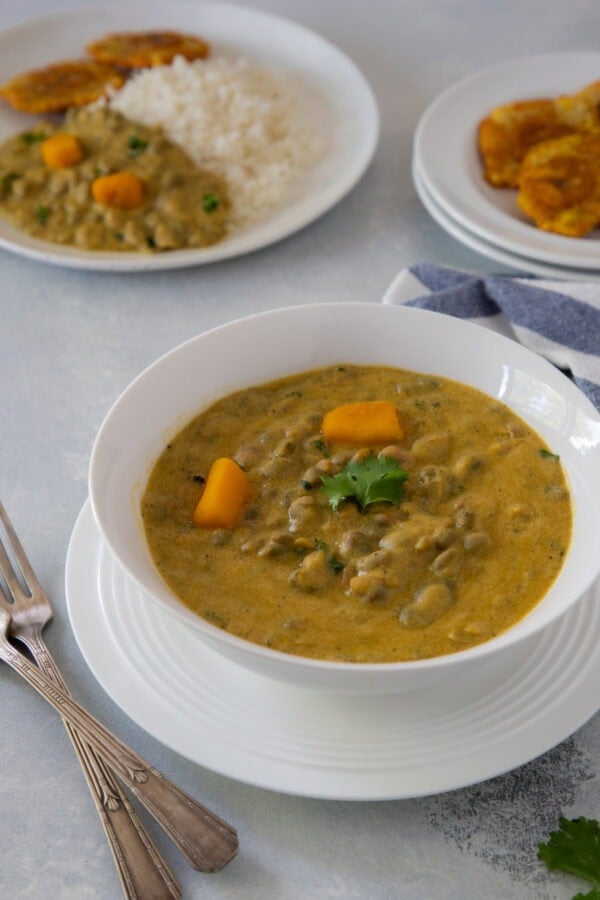




There’s something about coconut milk in Dominican cooking that instantly feels comforting. It adds richness without making a dish feel heavy, and when paired with gandules, herbs, and soft pieces of squash, the result is pure Caribbean comfort in a bowl.
Gandules con coco is especially popular in the northern coastal regions of the Dominican Republic, where coconut milk finds its way into everything from rice dishes to seafood stews and desserts. The flavor is subtle but unmistakable. Creamy, savory, slightly sweet, and deeply rooted in coastal Dominican cooking.
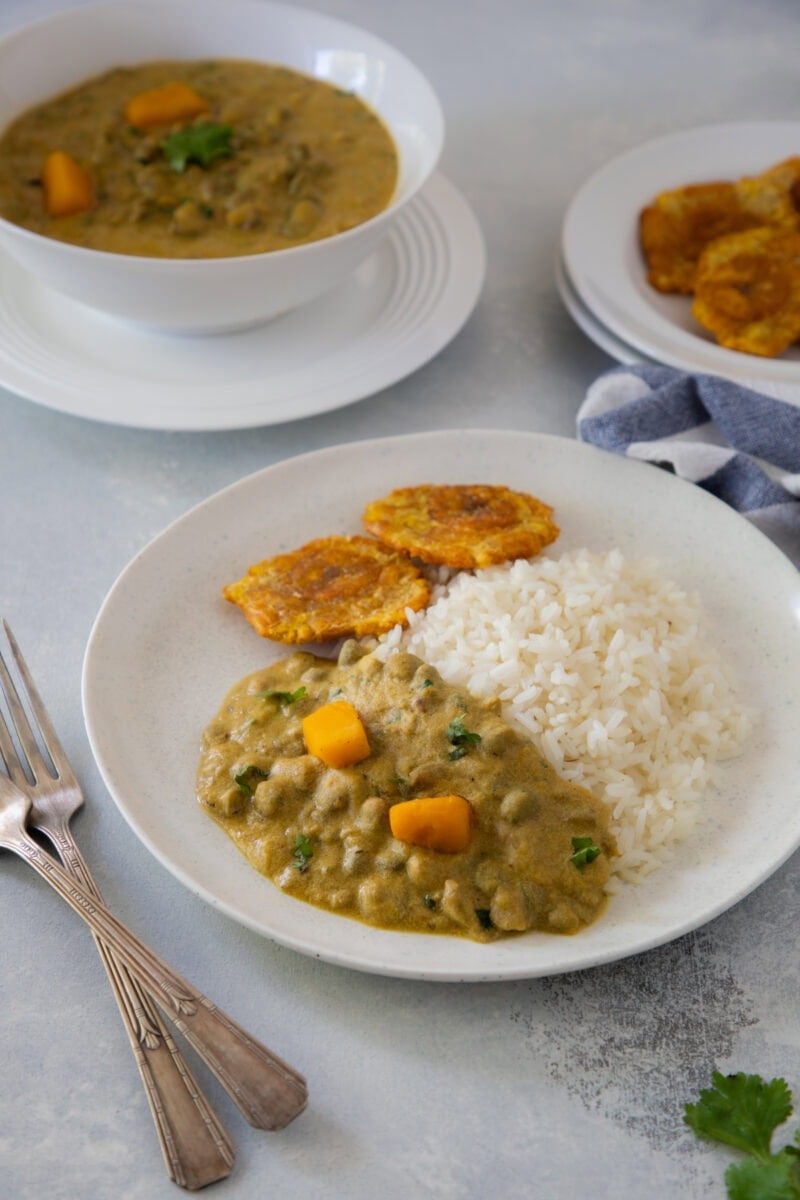
This is the kind of dish that tastes even better served next to a big plate of White Rice, a piece of Pollo Guisado (Dominican Stewed Chicken), or alongside crispy Concón or Pegao Rice (Dominican Crispy Rice) when you want that extra crunchy bite.
What I love most about this recipe is how humble the ingredients are. A few aromatics, coconut milk, squash, and pigeon peas slowly come together into something that feels rich, nourishing, and full of homey flavor.
Step-by-Step Instructions
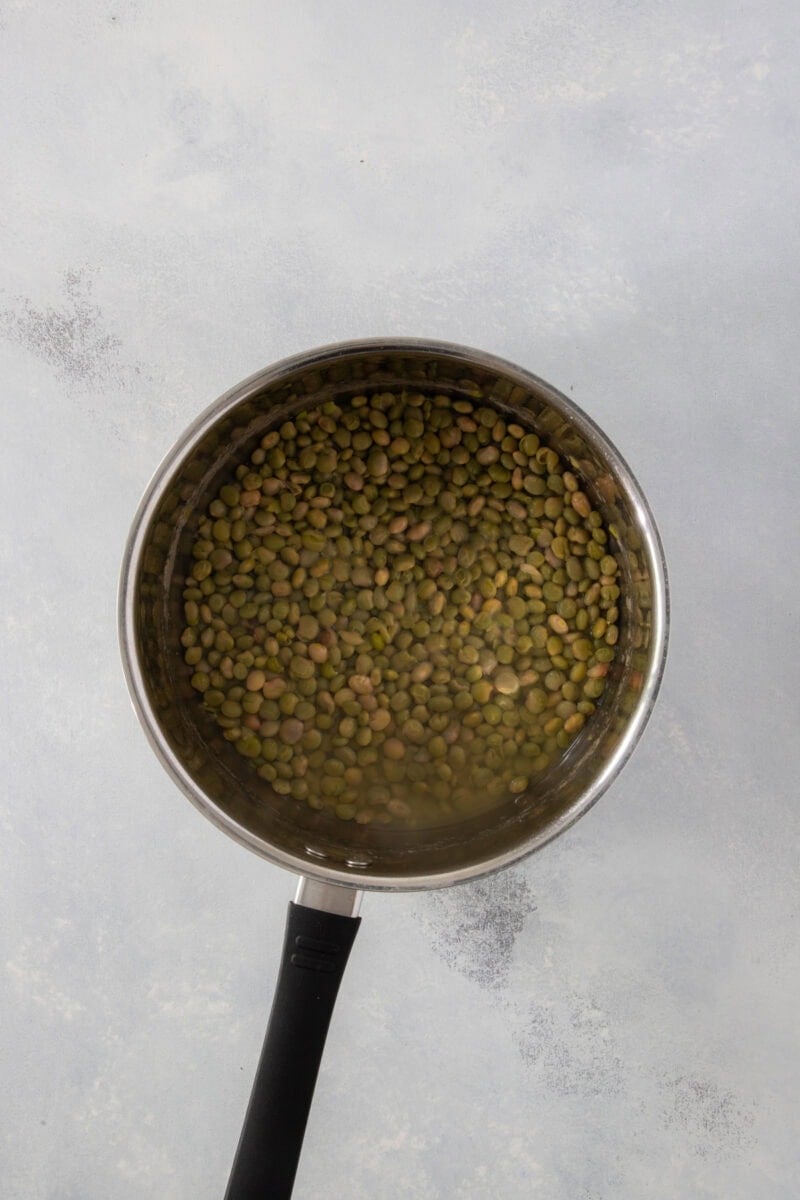
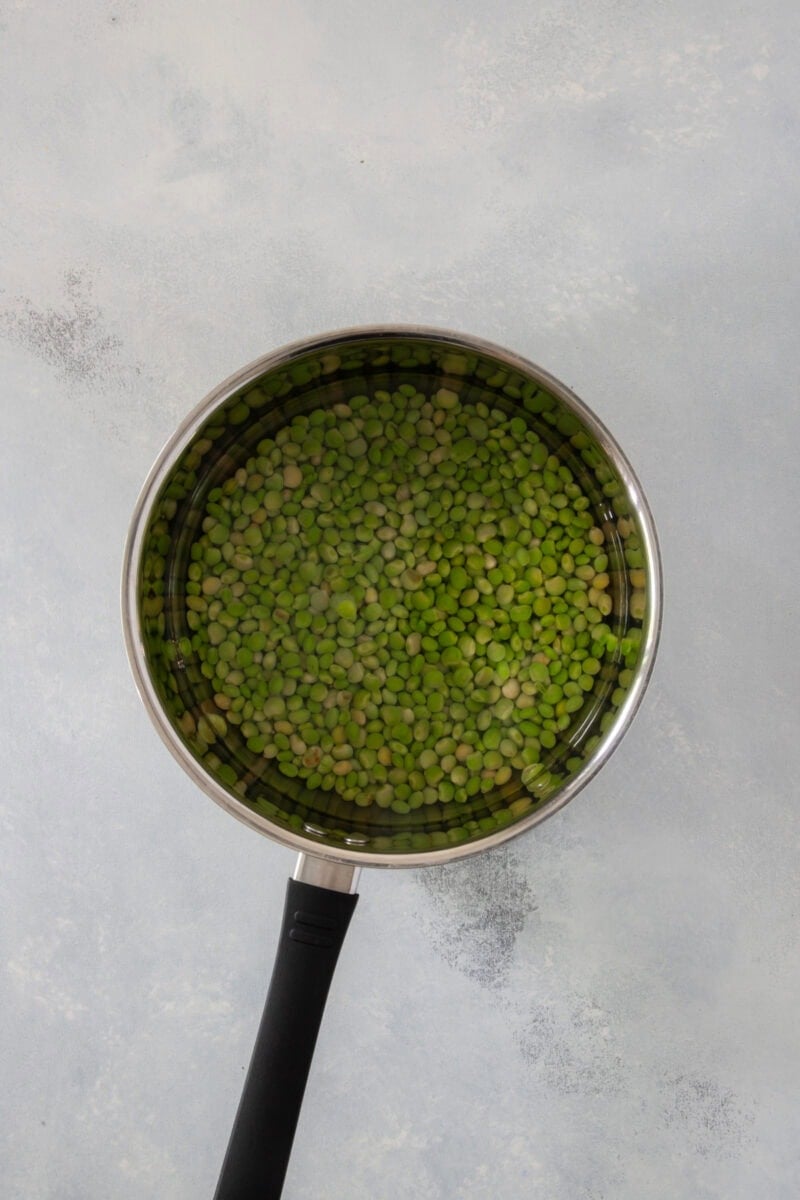
Start by rubbing the pigeon peas with salt before rinsing them well under cold water. This is a traditional step many Dominican cooks use before boiling gandules, and helps remove some of the cloudy residue the gandules release before cooking.
Add the pigeon peas to a large pot with water and let them simmer until tender. Depending on the gandules, this can take around 45 minutes. Once they’re soft, reserve some of the cooking liquid before draining them.
While the pigeon peas cook, mash the garlic, ají gustoso peppers, oregano, and salt in a pilón until a coarse paste forms. This simple seasoning mixture gives the dish its signature Dominican flavor.
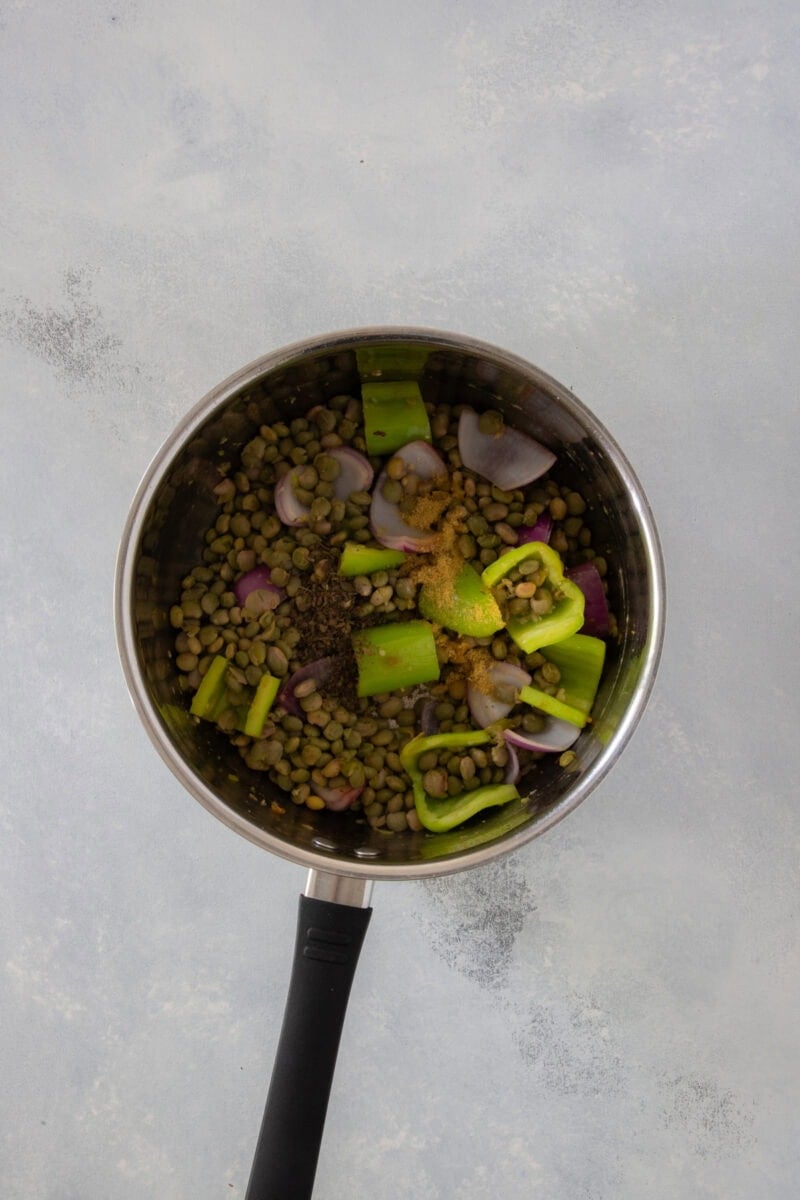
Return the gandules to the pot and add the fresh seasoning paste, squash, herbs, onion, cubanelle pepper, bouillon, bitter orange juice, black pepper, and coconut milk. As everything simmers together, the broth becomes rich, fragrant, and creamy.
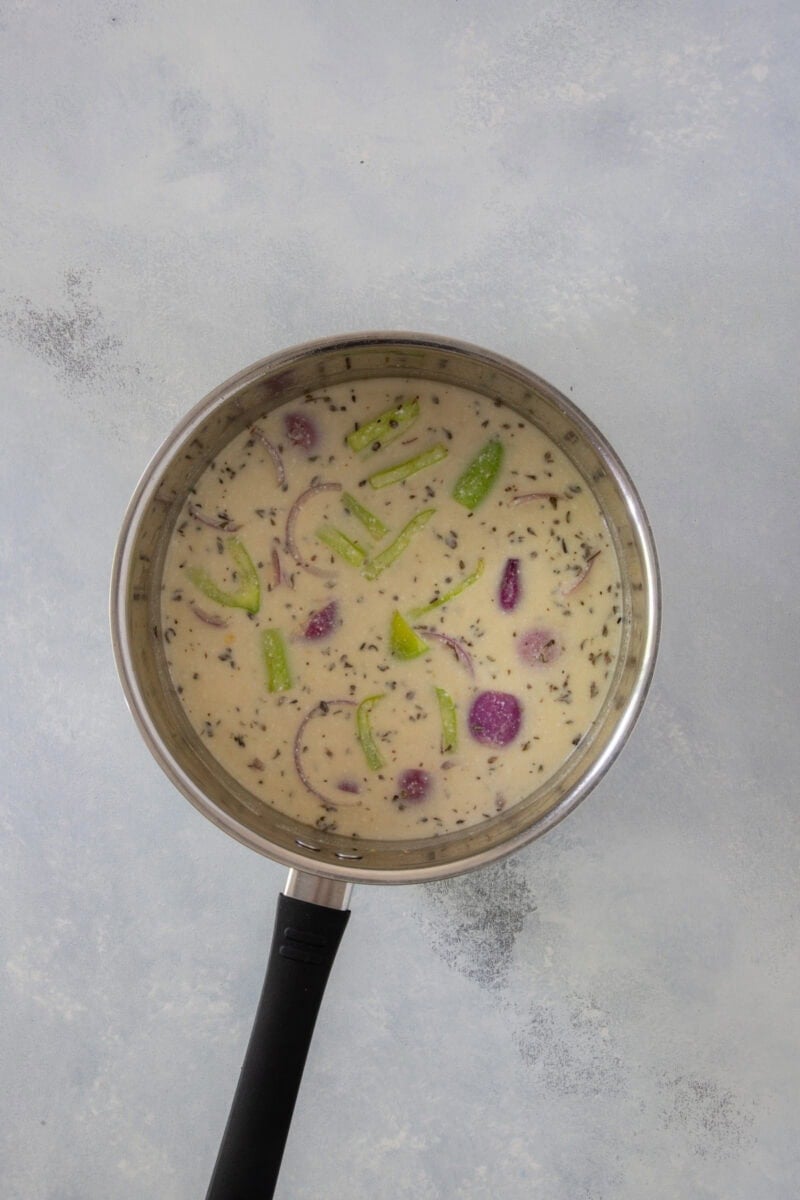
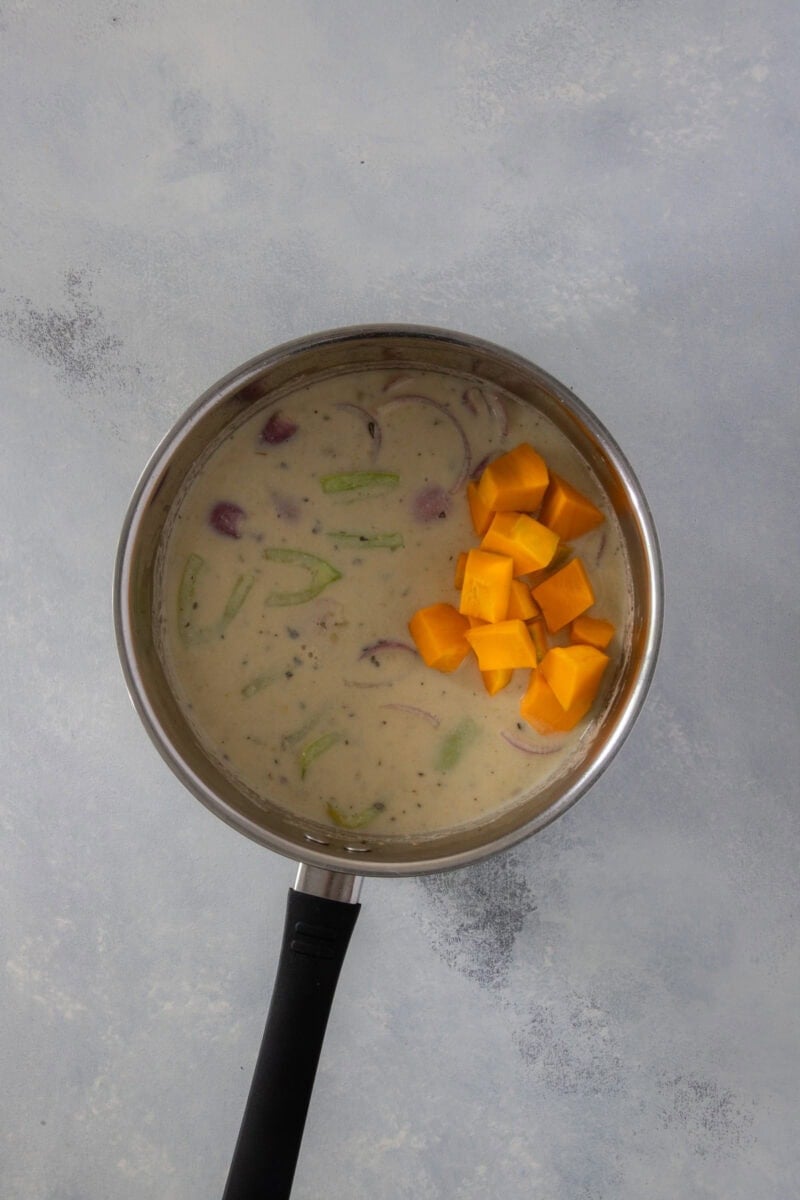
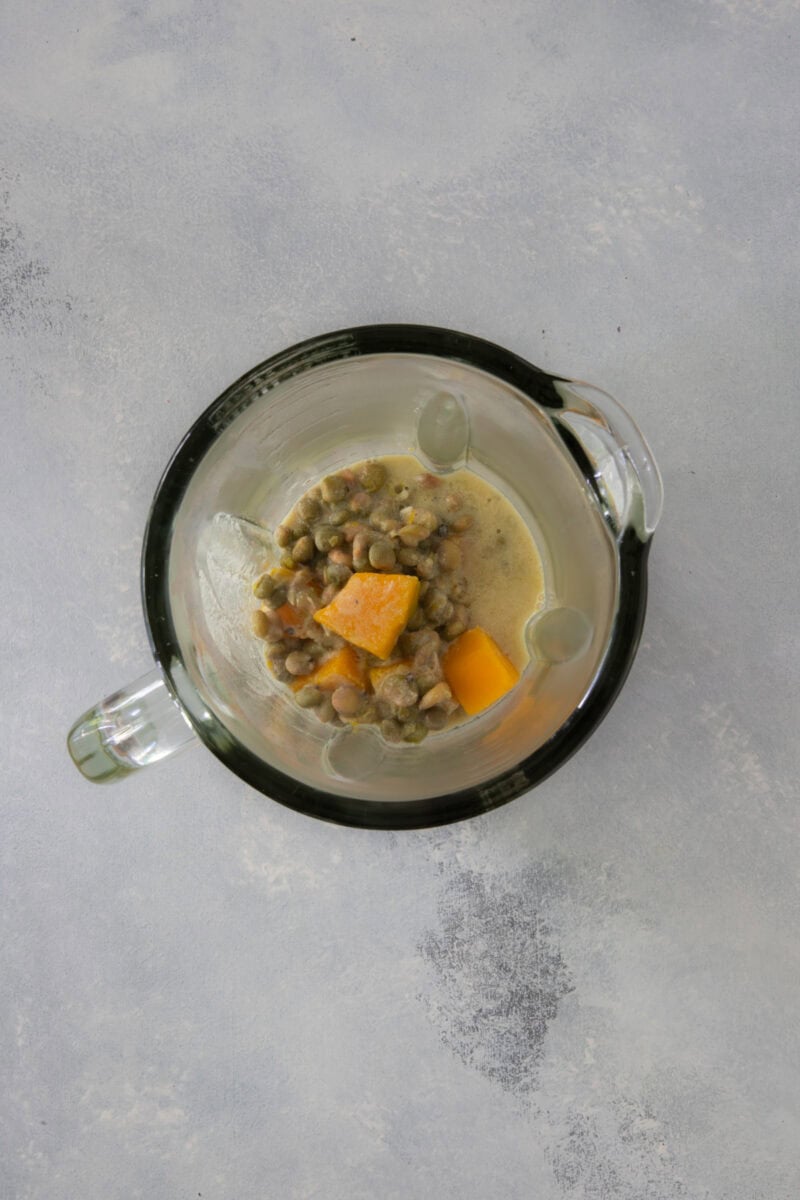
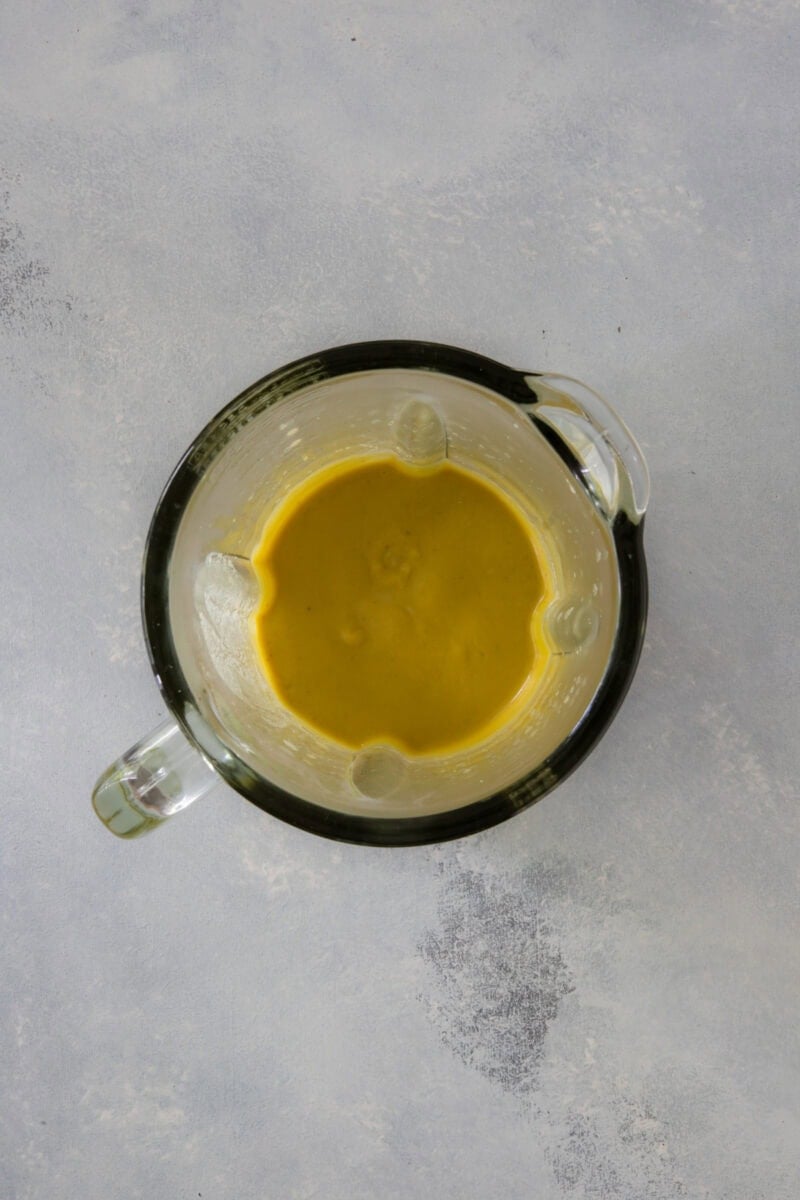
Once the squash is tender, blend part of it with a little cooking liquid before stirring it back into the pot. This creates a naturally creamy texture without making the dish feel too heavy.
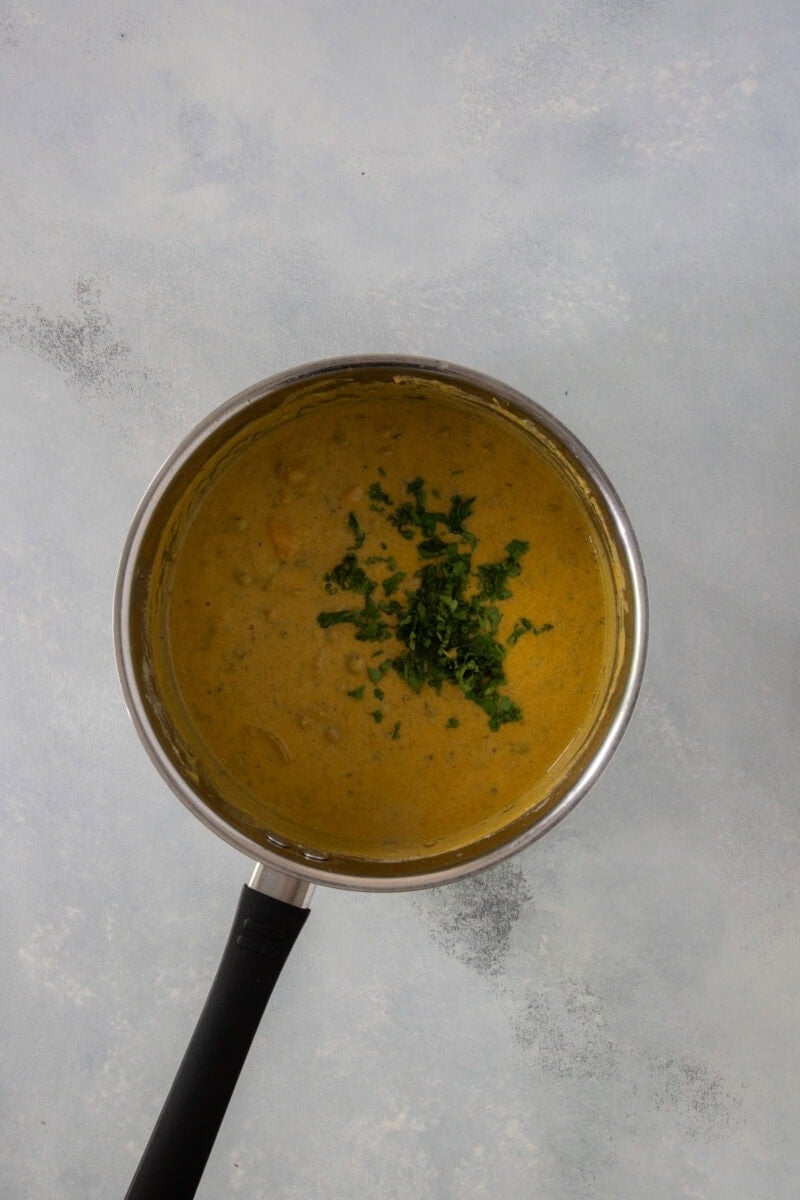
Keep the heat gentle during the final simmer so the coconut milk reduces slowly without separating too much. By the end, the broth should feel silky and flavorful, coating the gandules beautifully.
If you’ve already made my Easy 15-Minute Sofrito Recipe, you can use a few spoonfuls in place of the garlic paste, onion, cubanelle pepper, cilantro, and culantro for a quicker version with lots of flavor.
Serving Suggestions
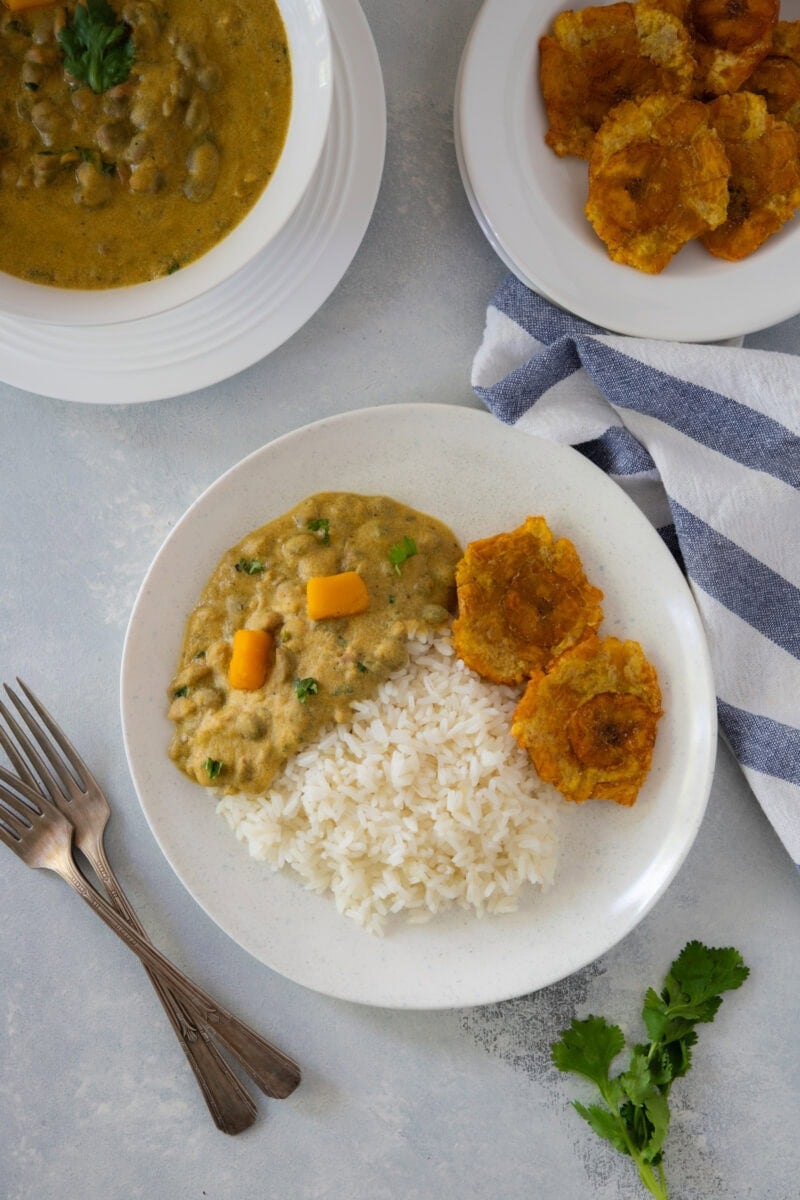
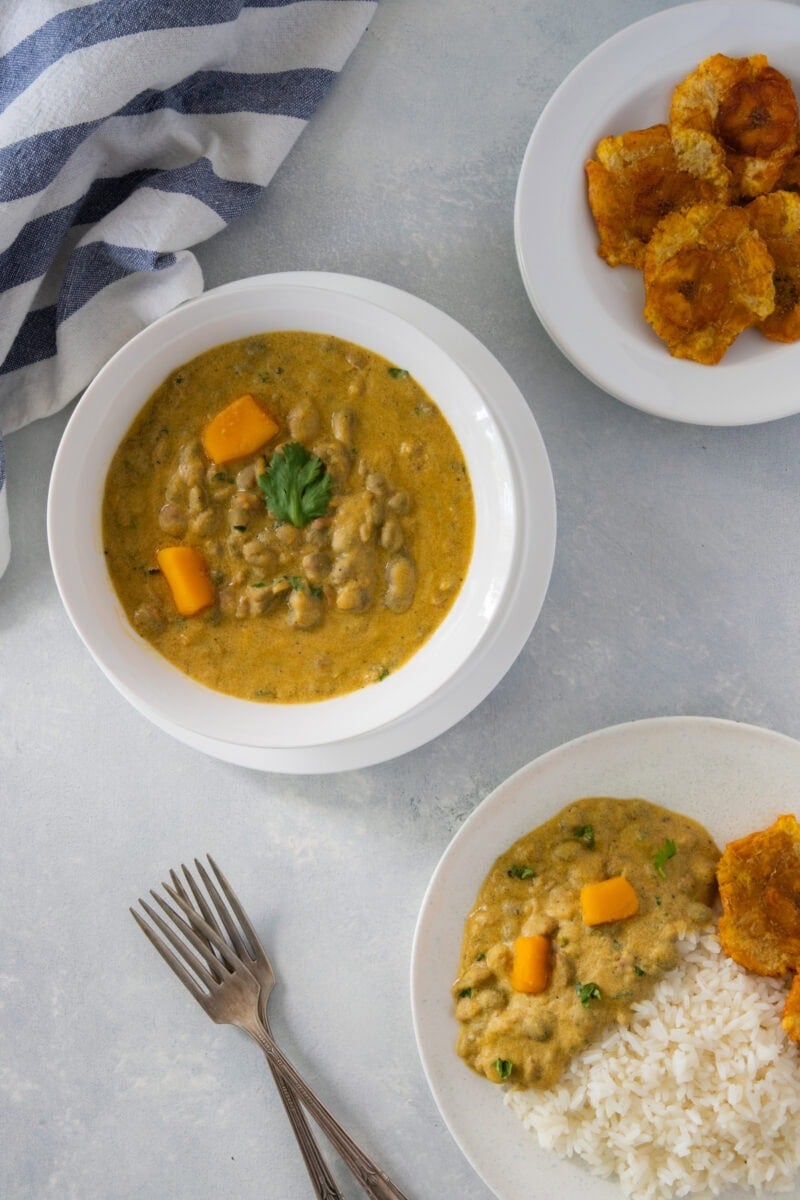
Gandules con coco is usually served as part of a full Dominican meal with white rice and a protein on the side.
A few of my favorite pairings are:
- White Rice (Arroz Blanco)
- Pollo Guisado (Dominican Stewed Chicken)
- Bistec Encebollado (Dominican Steak and Onions)
- Pescado en Coco
- Chicharrón de Cerdo in the Air Fryer (Crispy Pork Belly Bites)
And if you grew up loving crunchy rice like I did, serving this with a side of Concón or Pegao Rice (Dominican Crispy Rice) feels almost like a treat.
For a full Dominican-style meal, serve these creamy gandules alongside fried fish, white rice, and a fresh side salad for a comforting combination of flavors and textures.
Storage Tips
Store leftover gandules con coco in an airtight container in the refrigerator for up to 4 days.
As it sits, the broth will continue to thicken slightly because of the blended squash. When reheating, simply add a splash of water to loosen the consistency if needed.
You can reheat it gently on the stovetop over medium-low heat or in the microwave until warmed through.
This dish also freezes well for up to 2 months.
Recipe Tips
- Ají gustoso adds a very traditional Dominican flavor to this dish. If you can find it, it’s absolutely worth using.
- Keep the cubanelle pepper and onion whole while simmering so they flavor the broth without overpowering it.
- Blending part of the squash into the broth creates a naturally creamy texture while keeping the dish smooth and comforting.
- If using canned gandules, make sure to rinse them well before adding them to the pot.
- Coconut milk can naturally separate while cooking. Just stir gently and continue simmering until the broth becomes smooth again.




 Follow Me on Facebook
 Follow Me on Instagram
Let us know your thoughts!